
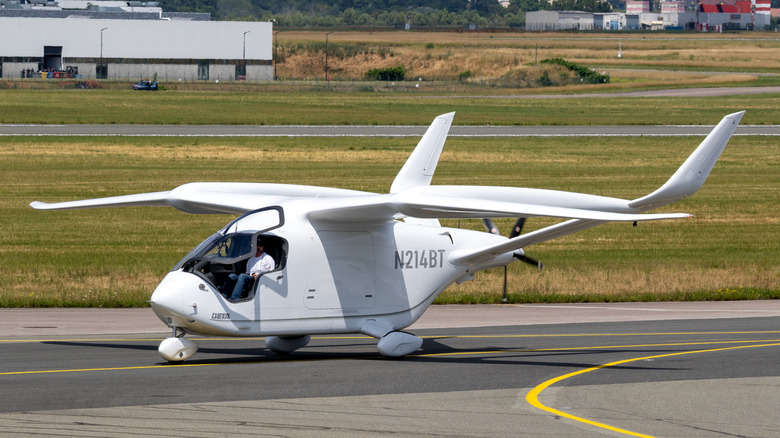

In a significant advancement toward facilitating the extensive implementation of hybrid-electric aircraft, a German company has developed a motor that generates 1,000 horsepower while weighing only 207 pounds. Created at the Fraunhofer Institute for Integrated Systems and Device Technology, this motor can deliver a power output similar to that of small turboprop engines and has the potential to power regional aircraft, as well as support the realization of AI-operated flying taxis. In the field of aviation, every ounce counts, making the reduced weight of this electric aircraft motor just above 200 pounds a crucial milestone for practical application.
An efficient, lightweight electric engine could considerably diminish flight operating costs—primarily through fuel savings—especially for regional planes where efficiency improvements during takeoff and ascent are particularly significant. Such savings could ultimately benefit consumers. A lighter motor may enable extended range, increased payload capacities, and enhanced efficiency, rendering this Fraunhofer design attractive to businesses and researchers focused on hybrid-electric aircraft and possibly genuine flying cars.
The motor is also equipped with numerous safety redundancies, which are vital in aviation. It consists of four independent sections, each containing its own inverter, winding, and control systems. If one section fails, the remaining three can compensate and prevent a complete system failure.
Key innovations of the motor
While the eye-catching output of 1,000 hp is notable, the critical measure is the power-to-weight ratio. According to Fraunhofer, the motor has an impressive 8 kilowatts per kilogram (kW/kg) ratio, significantly surpassing the standard 2-4 kW/kg of electric vehicle motors and other aviation designs, which often peak around 5 or 6 kW/kg. Achieving this level of efficiency necessitates several significant advancements. One such advancement is the incorporation of hairpin copper windings in the stator of the motor, the static component that generates the magnetic field interacting with the rotating rotor.
Hairpin windings are flat, U-shaped copper conductors, replacing the conventional round copper wire. This configuration enables engineers to fit more copper into a constrained space, thereby increasing power density and enhancing heat dissipation. Speaking of heat, another crucial aspect of the design is the implementation of direct oil spray cooling. Compared to air cooling, the oil spray offers more efficient heat dissipation, allowing the electric motor to operate harder without risk of overheating and to be designed within a smaller size.
Implications for flight
The Fraunhofer initiative is part of a broader program known as Project AMBER, which is financed by the European Union. The goal of AMBER is to promote the development of more sustainable fuel systems like hydrogen cells and hybrid turbines within aviation. Practically, this means the motor is being engineered with regional aircraft as a focus rather than being merely a lab prototype. The Fraunhofer design will be integrated with Avio Aero’s Catalyst advanced turboprop engine to create a parallel hybrid setup, where both the complex, fuel-consuming turboprop engine and the electric motor collaborate to drive the propeller.
The wider implication is that the aviation industry is progressing toward propulsion systems that move away from conventional fuel sources, similar to the Luft Pinoy, which merges an electric vehicle and an eVTOL system. Although fully electric long-distance air travel for large commercial aircraft remains unattainable at this time, demonstrating such energy density indicates that hybrid regional aircraft capable of lower fuel consumption and reduced emissions are within reach. This aligns seamlessly with Project AMBER’s initiative to lower aviation-generated carbon dioxide emissions by up to 30%.