Cost-Effective Substitute for Steam Deck: Robust Console Currently $100 Discounted at Walmart

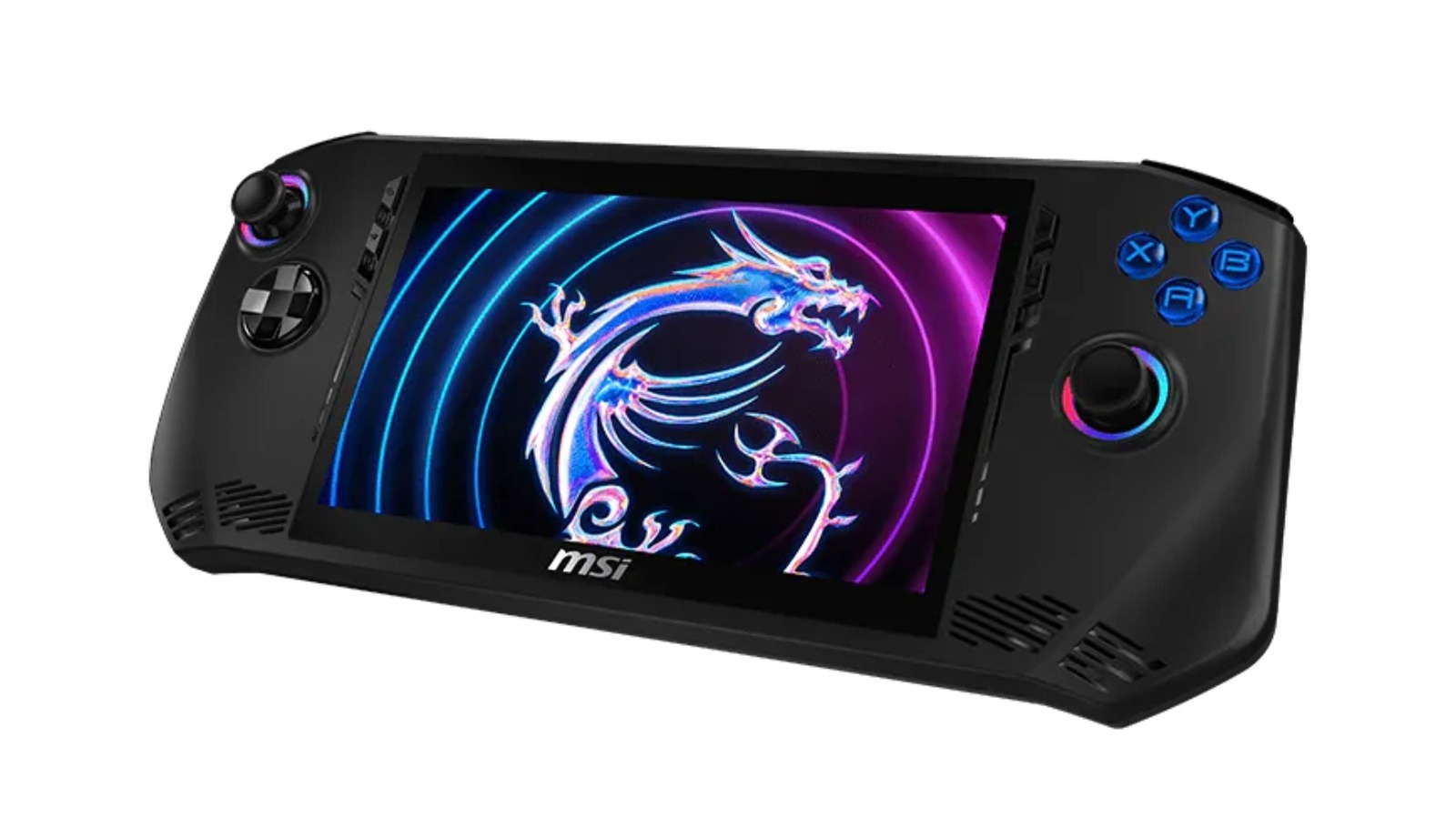
more potent than Valve’s own portable gaming device. These alternative models provide various features and are frequently more accessible than the Steam Deck, which has seen stock issues in recent months. One such model is the MSI Claw, a series launched in March 2024, utilizing Intel Core Ultra processors in the majority of its variants and operating on Windows 11. The latest Claws have incorporated Copilot AI and enhanced specifications, but the MSI Claw A1M-051US still stands out with its Ultra 7-155H processor as a reliable device.

Priced at $699, the MSI Claw A1M is marginally pricier than the Steam Deck OLED’s 1TB variant, which retails for $649. However, it compensates for its lower built-in storage of 512GB with superior technical specifications. Nevertheless, if the cost had previously seemed a bit steep, it’s important to mention that the MSI Claw A1M is currently available at Walmart for $598.95—a reduction of over $100.
Cut costs on the MSI Claw A1M via Walmart

At $598.95, which is just under 15% off, the MSI Claw A1M costs about $50 more than the 512GB Steam Deck OLED. Valve’s handheld features a 1280×800 screen with a refresh rate reaching 90Hz. In contrast, the Claw boasts a resolution of 1920×1080 and a refresh rate of 120Hz. It also outperforms in speed, with a maximum CPU clock of 4.8 GHz compared to the Steam Deck’s 3.5GHz. Additionally, it supports Wi-Fi 7 while the Deck operates on Wi-Fi 6E.

Another advantage of the Claw is its compatibility with various gaming platforms, such as Steam, Xbox, and Epic. While users of the Steam Deck can access games from Xbox and other third-party services, they must manually download different launchers. Moreover, the Claw includes Hall Effect joysticks designed for greater durability, preventing stick drift, along with customizable RGB lighting surrounding the joysticks and buttons.

Other features of the MSI Claw A1M are similar to those of the Steam Deck, including 16GB of RAM and a slightly smaller display (7″ compared to the Steam Deck’s 7.4″). A common feedback point for Claw models is battery lifespan, but that’s by no means an exclusive issue. After all, users are consistently attempting to find <a href="https://www.bgr.com/

Apple Increases the Mac Mini’s Starting Price

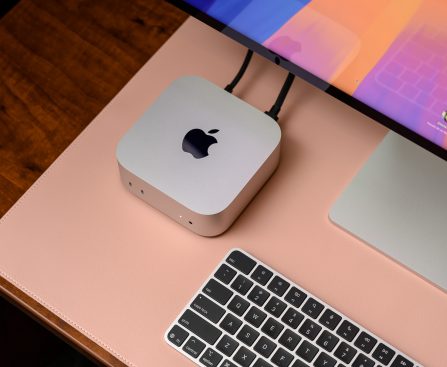
Apple’s Mac Mini now starts at $799 after the company pulled the $599 option with 256GB of storage from its online store, as spotted earlier by MacRumors. The model’s discontinuation comes just one day after Apple CEO Tim Cook said during an earnings call that a chip shortage will impact its Mac products in the […]

A Summary of Tim Cook’s Major Apple Purchases in Hardware, Software, and Services

**Apple’s Tactical Acquisitions During Tim Cook’s Leadership**

Tim Cook’s period as CEO of Apple has been defined by a number of tactical acquisitions that have greatly improved the company’s product lineup and technological prowess. Although Apple chose not to acquire Tesla, its purchases of smaller firms have been instrumental in defining its existing ecosystem.

### A Varied Collection of Acquisitions

As Tim Cook gets ready to pass the leadership to John Ternus on September 1, it is clear that Cook’s M&A accomplishments will take considerable time for Ternus to equal. Many acquisitions made under Cook’s guidance have significantly impacted the features and services available in Apple’s hardware and software.

1. **AuthenTec (2012)**: This acquisition established the foundation for Touch ID, which launched with the iPhone 5s in 2013, bolstering device security and user convenience.

2. **PrimeSense (2013)**: Recognized for creating the technology that powered Microsoft’s Kinect, PrimeSense’s technology was crucial in the debut of Face ID with the iPhone X in 2017.

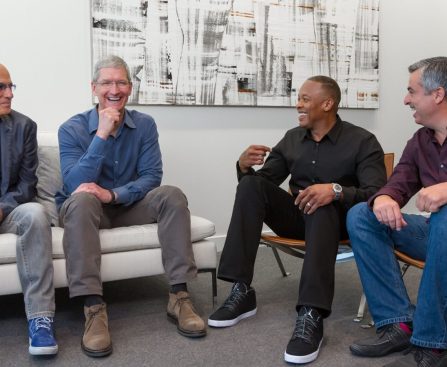
3. **Beats Electronics (2014)**: Acquired for $3 billion, this daring decision not only broadened Apple’s audio product range but also laid the groundwork for Apple Music, integrating Beats Music into Apple’s ecosystem.

4. **Workflow (2017)**: The automation application led to the creation of Shortcuts, improving user experience across iOS and macOS.

5. **Beddit (2017)**: This sleep tracking technology was incorporated into the Apple Watch, exemplifying Apple’s dedication to health and wellness.

6. **Texture (2018)**: The subscription magazine service evolved into Apple News+, enriching content offerings for Apple users.

7. **Shazam (2018)**: This music identification service continues to be a popular aspect of Apple’s ecosystem, demonstrating the company’s investment in music technology.

8. **Intel’s Smartphone Modem Business (2019)**: Purchasing this division for $1 billion enabled Apple to create its own cellular modems, lessening dependence on Qualcomm.

9. **Dark Sky (2020)**: This weather application acquisition enhanced precipitation alerts in Apple Weather, improving the utility of Apple’s weather services.

10. **NextVR (2020)**: Concentrated on virtual reality, this acquisition has helped create immersive experiences in Apple’s Vision Pro.

11. **Primephonic (2021)**: The classical music streaming service was transformed into Apple Music Classical, appealing to a specific audience.

12. **Pixelmator (2024)**: This acquisition enhanced Apple’s Creator Studio, improving creative tools for users.

13. **RAC7 (2025)**: The studio behind the well-liked Apple Arcade title “Sneaky Sasquatch” broadened Apple’s gaming portfolio.

14. **Severance Rights (2025)**: Securing rights to the hit Apple TV show opened up opportunities for spin-offs and content expansions.

15. **Q.ai (2026)**: This $2 billion acquisition is expected to enhance Siri and Apple Intelligence, signaling a focus on advancements in AI.

16. **MotionVFX (2026)**: Recognized for developing plugins for Final Cut Pro, this acquisition further enhances Apple’s creative software suite.

### Conclusion

Tim Cook’s tactical acquisitions have not only diversified Apple’s product lineup but have also established the company as a frontrunner in various technological domains. As John Ternus transitions into the CEO role, the influence of these acquisitions will undoubtedly guide his strategic choices in the future. The trajectory of Apple will continue to be shaped by the innovative technologies and services that these acquisitions have introduced.

Perplexity Grows on Mac-Native ‘Personal Computer’ Platform Following Apple’s Acknowledgment

# Apple Highlights Perplexity’s Personal Computer During Q2 2026 Earnings Call

Apple has recently acknowledged Perplexity’s groundbreaking Personal Computer platform during its Q2 2026 earnings call, illuminating the increasing importance of Mac-native applications in the field of artificial intelligence. This article explores the specifics surrounding Perplexity’s Personal Computer and its implications for both users and developers.

## Personal Computer: A Mac-Native AI Platform

Perplexity unveiled the Personal Computer platform last month, specifically crafted for Mac users, particularly those with the Mac mini. This platform acts as a personal agentic assistant, effortlessly blending local and cloud environments to boost productivity. According to Perplexity, the Personal Computer is envisioned as the future of work, allowing users to manage numerous models across files, applications, and the web within a cohesive system.

### Key Features and Advantages

The remarkable feature of the Personal Computer lies in its capability to operate across both local and cloud environments, surpassing the constraints of conventional AI agents that usually function within separate settings. This integration enables users to transition effortlessly between devices, initiating tasks on their phones and completing them on their Macs.

Perplexity underscores that the Personal Computer reinforces the continuity that Apple users anticipate, ensuring that work can be executed regardless of location.

## Recognition from Apple

During the earnings call, Apple CFO Kevan Parekh emphasized the partnership with Perplexity, observing that developers are progressively opting for the Mac platform to create enterprise-grade AI assistants. He credited this trend to the benefits of Apple silicon and its cohesive memory architecture, which enhance performance for AI applications.

Parekh’s comments arose in the context of the strong demand for the Mac mini and Mac Studio, which have seen substantial sales due to the success of platforms like Personal Computer. Apple confirmed that supply limitations will continue for several months as a result of this demand.

## Recent Developments and Updates

At an exclusive event in New York City, Perplexity’s CEO Aravind Srinivas elaborated on the platform’s functionalities, mentioning that it is designed to operate on any Mac, with the Mac mini being the ideal choice for optimal performance. Since its introduction, the Personal Computer has reportedly generated over $2.8 billion in labor-equivalent work for its Pro, Max, and Enterprise subscribers.

Perplexity also unveiled various enterprise-centric updates, including:

– Support for Microsoft Teams
– A native Excel integration currently in beta
– A new workflows feature for automating repetitive tasks
– Enhanced data connectors with platforms like Snowflake and Databricks

Additionally, a collaboration with 1Password was announced, allowing the Personal Computer to function within authenticated tools while protecting user credentials.

## Conclusion

Perplexity’s Personal Computer is positioned as a revolutionary tool for Mac users, incorporating AI functionalities into everyday workflows. With Apple’s backing and continuous updates, the platform is poised to transform productivity in both personal and enterprise environments. For further details on upcoming features and developments, interested users can visit Perplexity’s official website.