
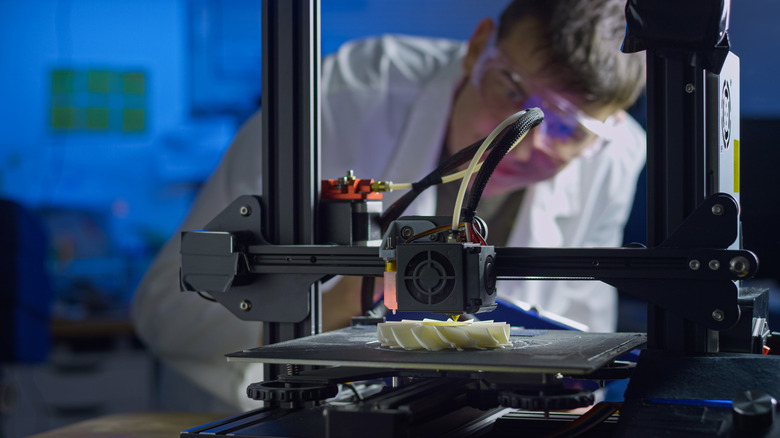

strange 3D-printing endeavors, you’ll appreciate this tale about a plane powered by electricity that operates with wings made of tissue paper. Aerospace engineer Tom Stanton aimed to construct a 3D-printed aircraft that could be hand-cranked for extended gliding. He drew inspiration from classic wind-up toys that utilize wound rubber bands to rotate the propeller. Similarly, Stanton’s aircraft employs a supercapacitor charged by a hand-cranked generator in merely four seconds.
While vintage toy airplanes are often crafted from balsa wood, Stanton opted for 3D-printed plastic to get his prototype airborne as quickly as possible. The frame of the plane was printed directly onto tissue paper to form the wings, with a carbon fiber rod fastening the wings to the aircraft’s structure. Stanton required a lightweight supercapacitor to retain an electric charge, so he selected a 2.7-volt capacitor with a capacitance of 10 farads, weighing just 3.2 grams. To complete the model, Stanton 3D-printed a plastic bracket for attaching the propeller, supercapacitor, and a micro-brushed motor to the plane.
In practice, the supercapacitor depleted its charge rather swiftly, but that’s acceptable. Its role is to provide the motor with sufficient initial power at launch so that the propeller can elevate the plane and enable it to fly for a considerable duration based solely on aerodynamics. In its optimal test, the plane achieved roughly 45 seconds of uninterrupted flight.