
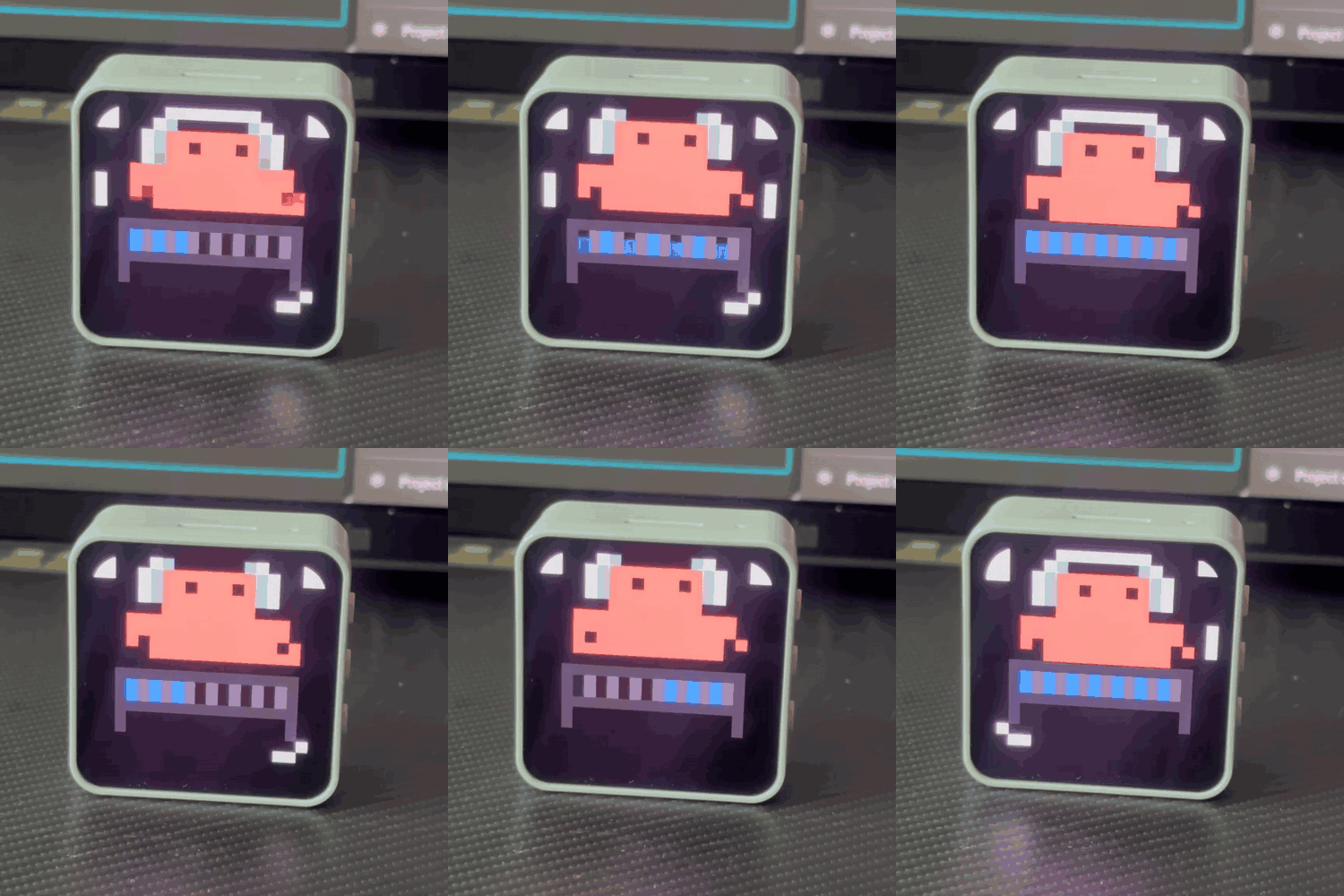

Silicon Valley’s tokenmaxxing era now has its own hardware, thanks to a new open-source project. This project features a compact desktop dashboard that displays Claude Code utilization stats, enabling AI power users to monitor their usage. While it’s possible to track Claude Code usage through terminal commands or external tools and apps, the pixel-art Clawd sprite dancing on the screen, followed by token usage info, provides a more enjoyable experience.
Named the “Clawdmeter,” this device serves as both a fun project for AI power users and a testament to Anthropic’s Claude’s influence on developers and the rise of tokenmaxxing. This trend involves software engineers at tech companies maximizing AI token usage as a metric of AI adoption.
One Reddit user humorously suggested that Anthropic should distribute these for free, while another proposed a feature to increase token capacity via a button. The concept for Clawdmeter originated from Reykjavik-based developer Hermann Haraldsson, who wanted to experiment with embedded devices. Though not an embedded developer, Haraldsson completed the project with assistance from Claude in just a few days, highlighting the democratization of programming.
The development focused heavily on design, ensuring the font, colors, and animations were just right. Building your own dashboard involves using a small lithium-ion battery-powered display like the Waveshare ESP32-S3-Touch-AMOLED-2.16, which connects to your laptop via Bluetooth. When activated, the device displays pixel-art Clawd animations that intensify with increased usage. Users can switch between animations with the middle button.
A simple button press displays session and weekly Claude utilization data in charts, while another press cycles to a Bluetooth screen with connection status and reset options. Two additional side buttons allow for Space and Shift+Tab commands over Bluetooth, enabling voice mode and mode-toggle shortcuts in Claude Code.
Clawdmeter tracks usage by reading your Claude Code OAuth token and retrieving usage data from response headers. As an open-source project, it allows users to customize features, animations, and screens according to their needs. Since its GitHub launch, over 800 people have starred it, and 50 have forked it for further development. The device’s nostalgic appeal resonates with users, recalling times when dedicated hardware devices, like Walkmans or iPods, were prevalent, creating a “hardware Tamagotchi” for context windows.
While Clawdmeter doesn’t replace existing functionalities accessible on computers, it adds an element of fun to the experience.