
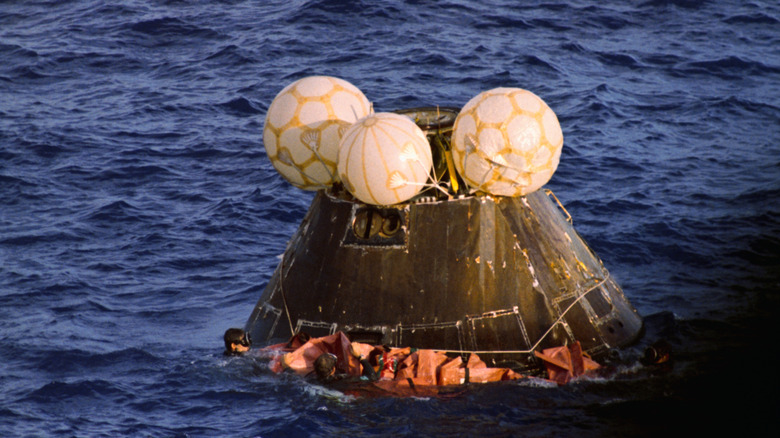

rocket launching and curving as it ascends into space, the splashdown represents a crucial aspect of American space exploration. Nonetheless, since the inception of the Soviet space program, Russian Soyuz spacecraft have been crafted to land in open fields. This divergence in the conclusion of American and Russian space missions may appear peculiar, or perhaps a result of a rigid Cold War-era inclination to do things differently, but there is a straightforward rationale rooted in geography.
It might seem obvious, yet the United States has far greater ocean access than Russia, which is the reason NASA launches its rockets on or near the coastline and lands them through splashdown. Since 1961, American crewed and uncrewed spacecraft have returned to Earth utilizing parachutes to slow their descent and the ocean to cushion the impact. Following that, NASA and the U.S. military collaborate to retrieve the spacecraft and its crew from the water and back to shore.
A crewed Russian mission has only concluded in a splashdown once: Soyuz 23 in 1976. Even then, the water landing was unintentional and nearly resulted in the deaths of its two crew members, who found themselves trapped in a semi-frozen lake for approximately nine hours.