
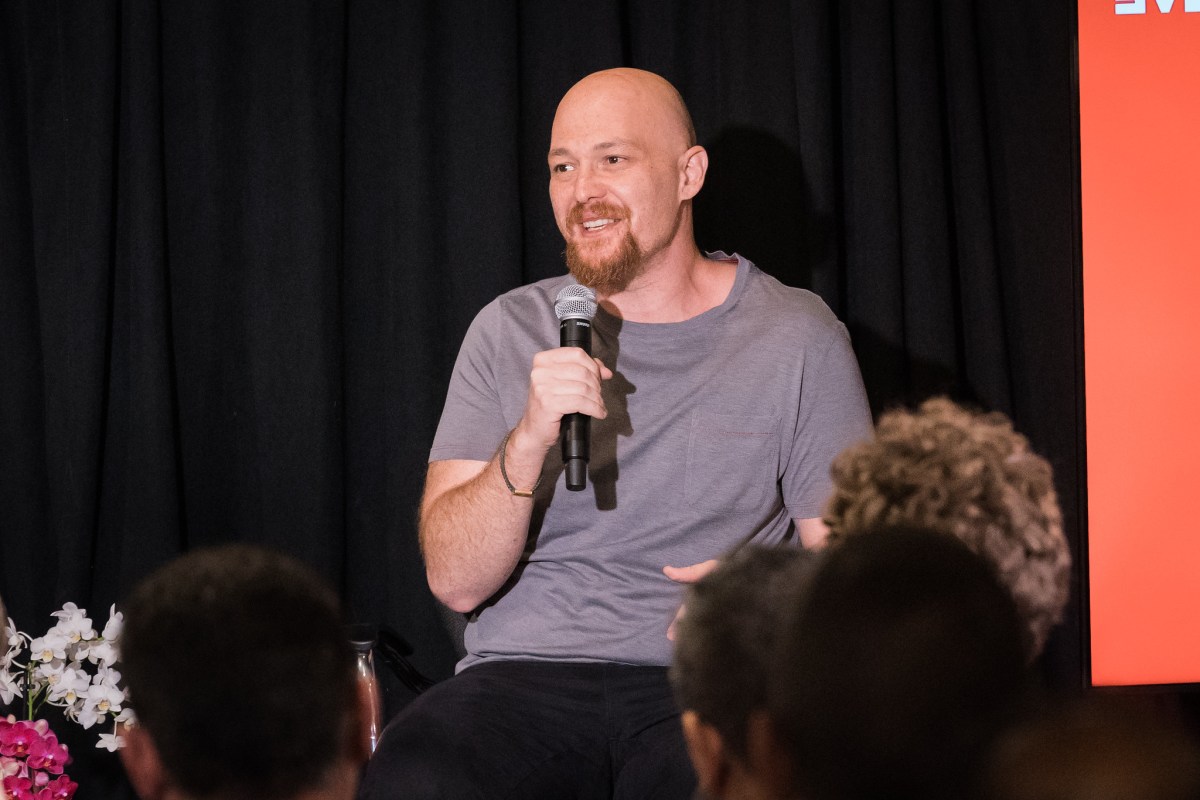

Amjad Masad has been developing Replit for ten years, yet the past 18 months have been extraordinary. The AI coding assistant company surged from $2.8 million in revenue in 2024 to approaching a billion-dollar annual run rate.
At TechCrunch’s sold-out StrictlyVC event in San Francisco, we discussed several topics, starting with whether Replit might sell, as competitor Cursor is reportedly in acquisition talks with SpaceX for $60 billion. We also examined Replit’s net revenue retention, reaching up to 300%, Masad’s readiness to challenge Apple in court over App Store issues, and the potential for the company to invest in its customers.
On independence, Masad was clear. Unlike Cursor, which has negative 23% gross margins, he believes Replit can sustain itself, even if he didn’t completely rule out a sale.
TC: What are your thoughts on the Cursor and SpaceX deal?
AM: Being an independent, smaller AI company is tough, especially if you’re burning cash. Reports suggest Cursor has negative 23% margins, and investing in model training makes staying independent challenging.
At Replit, targeting a different customer base lets us operate more sustainably. We’ve been gross margin positive for over a year. We’re a bit more expensive but offer more. Our users are mainly non-technical people who couldn’t previously create software. We offer an end-to-end platform, handling everything from prompts to scalable deployed applications, security, and database management.
TC: Is Replit for sale?
Yes, we regularly discuss potential acquisitions with partners. However, we want to remain independent. Having been established ten years ago, we envisioned a billion software creators by 2018. In September 2024, we advanced with our agentic coding experience, realizing that dream. It feels like there’s more to achieve.
TC: Who ranks best among Anthropic, Google, and OpenAI?
Anthropic excels in core agentic loops and tool calling. GPT-5 is progressing rapidly. Google’s Flash models offer great price-performance and are outperforming open-source models. We use all three, and new labs like Reflection AI and Chinese models like Kimi, which is catching up quickly, are promising.
TC: What determines your success in enterprise deals?
Our sales are mostly inbound, driven by product adoption. Enterprises value our security, with Replit being full-stack and open-sourced, unlike other tools. We’ve also spent a decade refining our cybersecurity, deploying each app on isolated projects on Google Cloud and benefiting from Google’s security model.
TC: How do you manage customer churn?
Churn is very low, and net retention is high, hitting 300% in some cases. Customers often find it challenging to replicate what they built on Replit into their own stack. Companies that secure our single-tenant environment retain their apps with us.
TC: Does AI bloat concern you?
Our regrettable spending is minimal. Enterprises are ROI-driven. For most, investments in Replit yield substantial returns—sometimes one, two, or even three orders of magnitude more than their spending.
TC: Replit has had issues with the App Store. How does that affect things?
It’s not critical since we could lose the app without significant impact. However, it’s popular, especially for learning and executive use. We suspect being blocked by Apple stems from Replit’s capability to make iOS apps. Apple’s reasoning that we download new code is false, and we’re prepared to contest this legally if needed.
TC: Would you invest in your own customers?
It’s a consideration. I’ve invested in startups that began on Replit, some like Magic School, which achieved significant success by reducing teacher workloads with AI, earning $20 million in the first year. Startups originating on Replit now hold impressive valuations, and our integration with Stripe is seeing rapid transaction growth. Soon, our customers might generate more revenue than we do.