
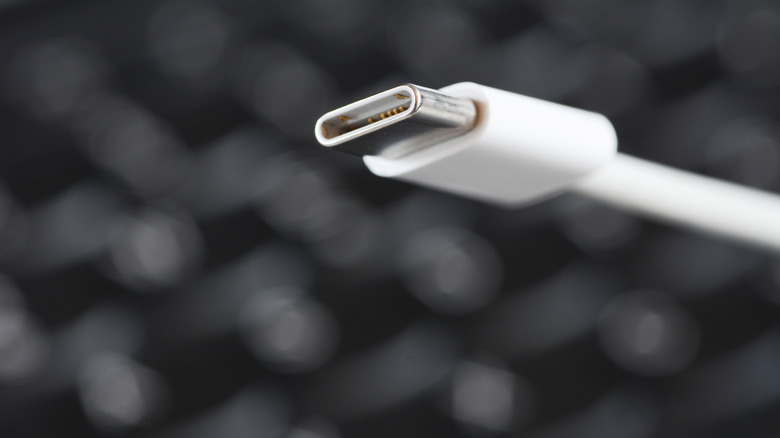

why the USB-C standard is so significant — and that’s a reasonable inquiry — is that it renders device ports and connectors on cables and accessories fundamentally more adaptable.
One must still consider a cable’s power delivery. USB-C actually spans multiple variants, with standardization applicable to the connector. It begins with USB-C 2.0, the basic version, which supports data transfer speeds of up to 480Mbps. Following that are USB 3.2 Gen 1, Gen 2, Gen 2×2, and USB 4, which includes PD (power delivery) functionality and Thunderbolt. USB-C PD allows for rapid charging with power delivery reaching up to 100-watts in certain cables, and up to a maximum of 240-watts in more recent cables.
Due to potential confusion, the clearest explanation is that each USB-C iteration can provide varying power outputs. A minimum of 18-watts or more is necessary for quick charging. Ideally, for contemporary devices, a 40-watt to 65-watt charger and cable are recommended, based on the device’s power demands. If a cable isn’t rated for higher power output, the capability of the power adapter becomes irrelevant; your devices will not be able to charge quickly. The cable determines the maximum power supplied. Additionally, there are specific cables for data, video, audio, and power among other uses.