
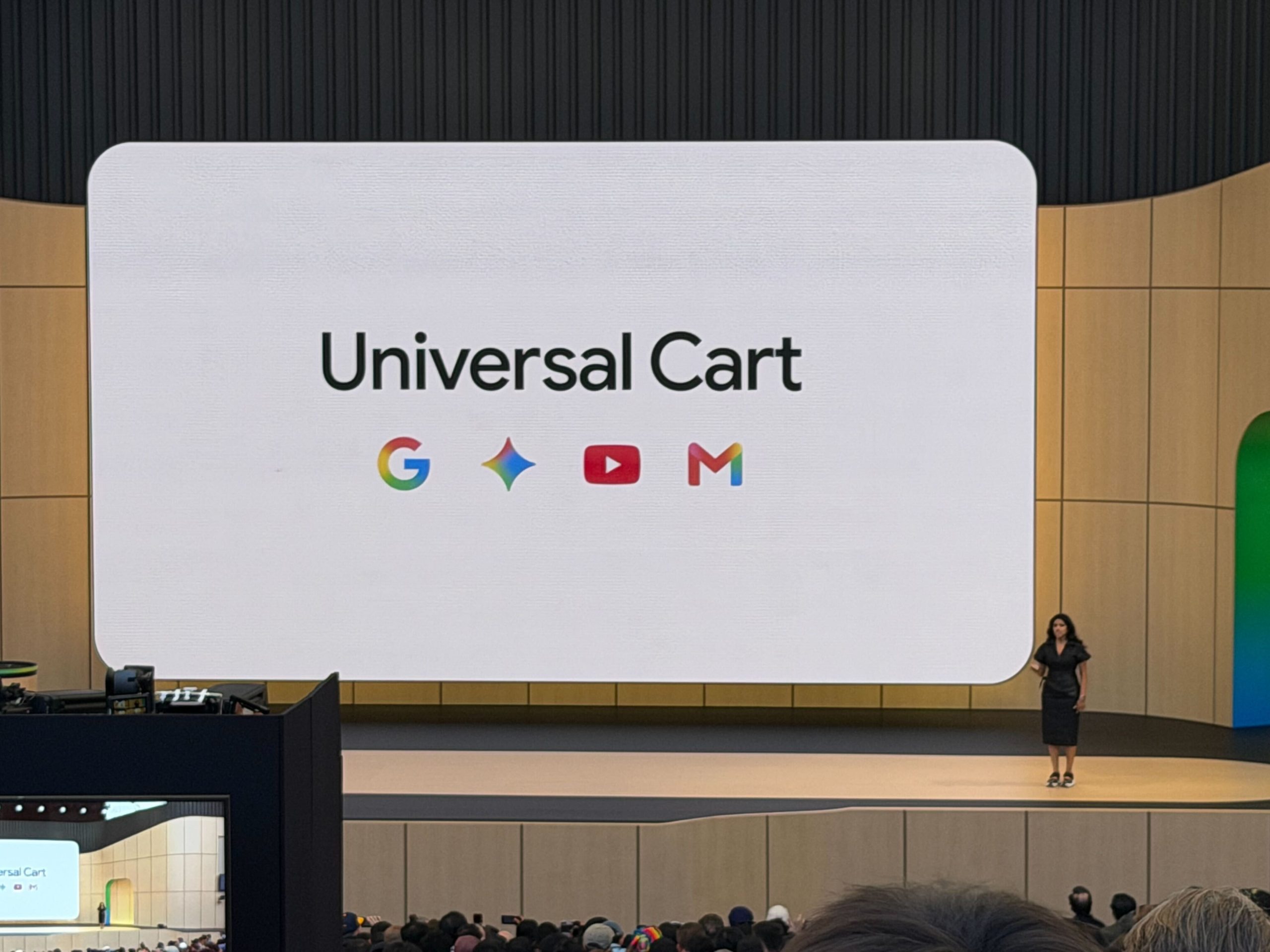

At Google I/O this Tuesday, Google unveiled Universal Cart, a unified shopping management hub. The company also shared updates to its Agent Payments Protocol (AP2) and announced plans to integrate this technology into Google products in the months ahead, allowing agents to make payments with user authorization.
These announcements highlight Google’s strategy to evolve AI assistants from passive tools into active players in online shopping. By establishing a centralized shopping framework and enabling software agents to autonomously handle purchases, Google aims to control a larger portion of the shopping experience and influence consumer-merchant dynamics.
Universal Cart lets users add products from any Google platform—be it Search, chatting in Gemini, watching YouTube, or reading Gmail. Once items are in the cart, it tracks deals, checks for price drops, provides price history insights, and alerts users if items are restocked.
Capitalizing on Google’s understanding of shopping habits across multiple devices, retailers, and days, the cart also incorporates AI for informed decisions. For instance, while building a custom PC, users can add components from different sellers into one cart, and Google can flag compatibility issues, like an incompatible processor and motherboard, suggesting alternatives.
The feature also helps maximize savings, especially for frequent travelers, as it’s built on Google Wallet. With Google’s Universal Commerce Protocol (UCP), users can checkout directly through Google with partner merchants or transfer items to the merchant’s site for purchase.
Universal Cart is launching in the U.S., and it will be available on the Gemini app this summer, followed by YouTube and Gmail. Google also revealed plans to expand UCP to categories like hotels and food delivery. UCP experiences will expand from the U.S. to Canada, Australia, and eventually the U.K.
A key announcement for the commerce industry is AP2, a protocol allowing AI agents to securely manage payments within set limits. Google detailed user-defined settings, such as specifying brands, products, and spending limits, with the agent executing purchases when conditions are met.
Google will introduce AP2 to its products soon, enabling insight into consumer behavior through discovery to purchase. AP2 ensures a secure, verifiable connection between user, merchant, and processor, maintaining data encryption and creating tamper-proof digital records for transparency.
Under AP2, agents’ activities are traceable, providing a permanent audit trail for returns or disputes.