

If you’ve ever played a role-playing game (RPG), you know the excitement of crafting your character and embarking on epic quests. Imagine an AI-driven, text-based RPG where every interaction with a non-player character (NPC) is completely unscripted.
Latitude, known for its AI-generated open-ended text adventure games with “infinite storylines,” has launched a new platform allowing users to become game designers.
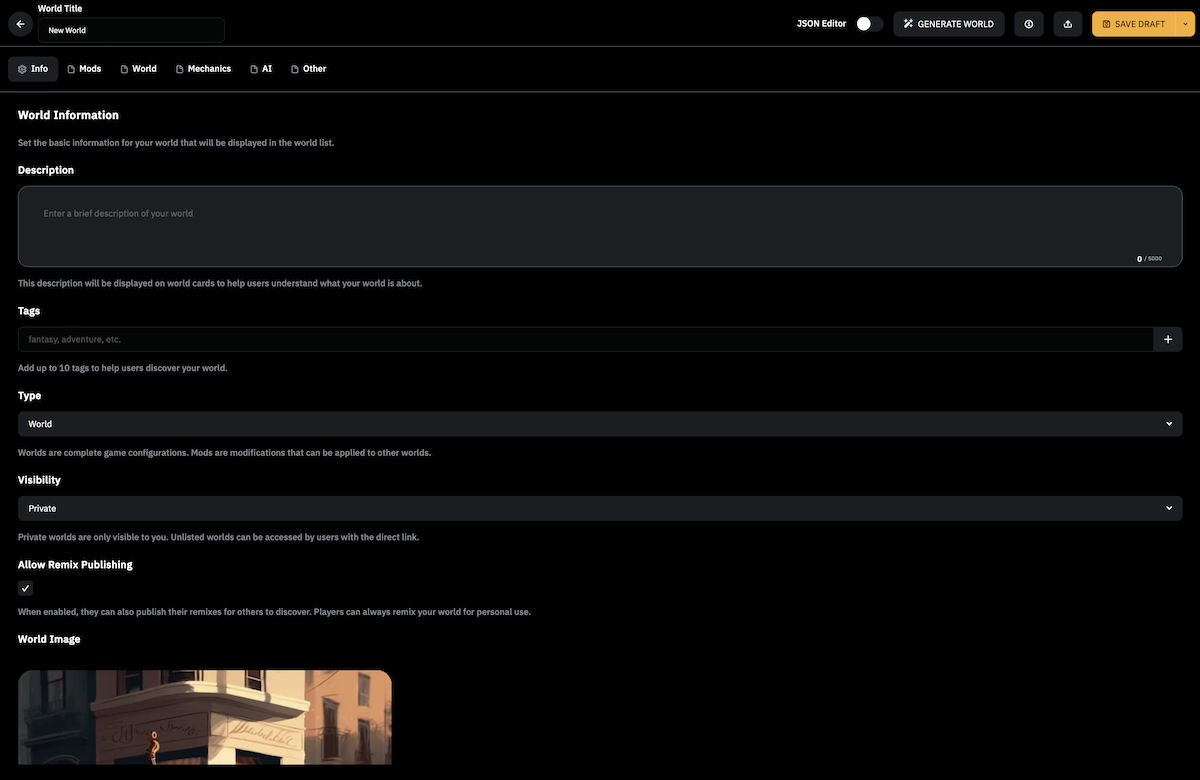
This AI-fueled RPG platform, called Voyage, lets players create their own gaming worlds with AI’s help. Players can detail settings, regions, cities, landmarks, main quests, and villains. Game mechanics, such as abilities, leveling, and combat, can also be configured.
For instance, if you envision a fishing village haunted by a sea monster, AI will generate the necessary code to realize that idea. You can further personalize your world before sharing it with others.
Voyage’s platform offers diverse experiences across genres, from cozy adventures to hardcore quests. Being text-based, players read the narrative and type their character’s actions.
Unlike traditional RPGs, where options are limited, players can choose unique scenarios like becoming a goblin therapist to resolve conflicts non-violently.
Actions entered by players are narrated by AI, dictating outcomes and NPC reactions. Since there’s no fixed script, interactions can diverge in unexpected directions, often leading to surprising or quirky exchanges. For example, a troll tying up your character may start discussing marital problems.
Character progression relies on skills and a dash of luck, akin to rolling dice in tabletop games. Characters can unlock special abilities like “Counterspell” as they defeat bosses or complete quests, with several inspired by Dungeons & Dragons spells.
If players get stuck, a chatbot suggests actions or even lets them skip parts of the story.
At Voyage’s core is Latitude’s World Engine, developed over five years. This engine uses multiple AI systems to narrate actions, manage gameplay, track characters and objects, and maintain backstories and relationships, ensuring game continuity. NPCs are dynamic, remembering prior interactions. A character you betray may avoid or even become a rival later.
“Characters are not just reactions to you; they have their own backstory and personality, reacting in real, lifelike ways,” said Latitude CEO and co-founder Nick Walton to TechCrunch.
Latitude debuted in AI-native gaming with AI Dungeon in 2019, amassing millions of players.
“It was one of the first generative AI interactions,” Walton said. “Voyage expands on AI Dungeon’s core idea, transforming it tenfold from a single AI model to a comprehensive world with deterministic systems, challenges, progression, and persistence—addressing issues AI Dungeon couldn’t fully tackle.”
Voyage is in expanded beta, with an open beta planned for later this year. Early tests saw interactions with over 160,000 unique AI-generated characters, each with distinct personalities. The average player made nearly 3,000 gameplay choices.
Latitude announced a partnership with Google’s AI Futures Fund alongside the launch. The platform combines its models with third-party models like Google’s Gemini Flash for images and Gemma for text, audio, and video.
Former Roblox Chief Business Officer Craig Donato is now an investor and board member. Other notable investors include Album VC, Griffin Gaming Partners, Midjourney, and NFX.
Voyage is free, with future subscription plans of $15, $30, and $50 offering advanced AI features and removing action limits.
While suitable for all ages, some experiences may contain mature content, similar to what you might find on Steam. Safety measures and parental controls are in place to filter inappropriate material.