
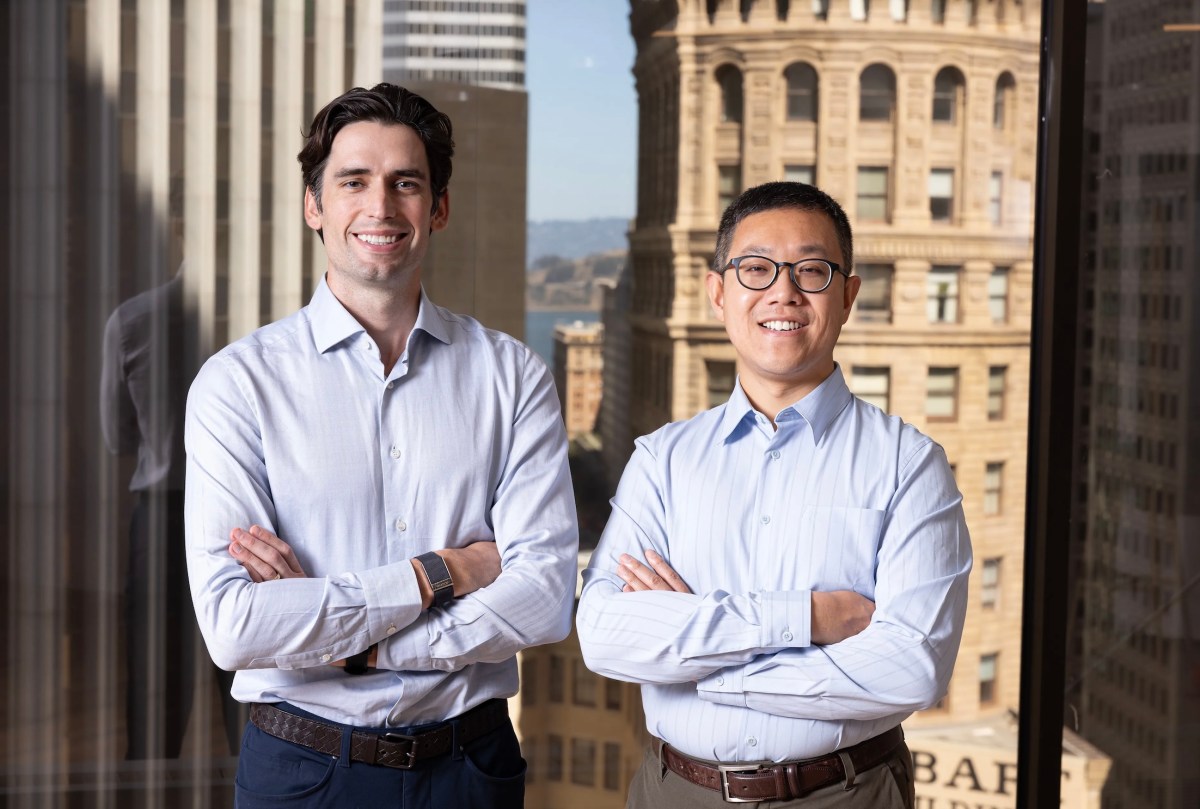

Supply chains are complex. San Francisco-based startup Loop is not just helping companies tidy up their supply chains; it’s using AI to provide predictive and prescriptive solutions, similar to an ideal healthcare provider.
“I do an annual checkup, and it’s like, oh I should be walking more,” said Loop co-founder and CTO Shaosu Liu. “But that’s not the end goal, right? The end goal is someone teaching me about nutrition, someone teaching me about longevity.”
Loop secured $95 million in a Series C funding round from prominent Silicon Valley investors, announced Friday. The round was led by Valor Equity Partners and the Valor Atreides AI Fund, with investments from 8VC, Founders Fund, Index Ventures, and J.P. Morgan’s late-stage fund, Growth Equity Partners.
With engineering talent being highly coveted, co-founders Liu and CEO Matt McKinney plan to allocate significant funds towards hiring, especially in light of the current volatility in global supply chains that’s driving AI investment.
Deliverr founder Harish Abbott raised an $85 million Series A round last year to automate work performed by freight shippers and carriers. A startup called Amari AI, founded by former Google and LinkedIn engineers, emerged to help modernize customs brokers’ outdated systems. Established firms like Uber Freight and Flexport are also investing heavily in AI. (Flexport founder and CEO Ryan Petersen is an early investor in Loop.)
Loop’s offer is straightforward: it helps customers structure unstructured data like PDFs without OCR, paper documents, and digital messages to automate tasks, developing a harness that coordinates multiple AI models, some proprietary and others frontier.
This enables customers to identify where money or time is lost, or the risks of over- or under-supplying products, saving thousands right away. Liu emphasizes a predictive, not just diagnostic, goal.
Loop is incorporating diverse data from customers, integrating with enterprise resource planning software and transportation management systems, and gathering data from suppliers, warehouses, and other components.
“Loop deeply explored the toughest parts of the supply chain and turned it into a customer advantage,” said Antonio Gracias, Valor’s founder, CEO, and chief investment officer. “Their AI systems transform fragmented, inaccessible data into intelligence that enhances cost, processes, and working capital, extending into other operational and financial functions. Loop is poised to become the intelligence layer of the entire supply chain.”
Liu views Gracias’ support as significant validation, given Valor’s backing of Elon Musk’s xAI. Valor conducted “deep diligence on how defensible” Loop’s business is, said Liu, who believes no other company is pursuing their domain with the same rigor or talent.
McKinney mentioned that while founding Loop, they assumed AI technology wouldn’t limit them but wouldn’t tip until around 2030. Progress is occurring faster.
This doesn’t bother him. Instead, McKinney sees it allowing Loop to emphasize customer benefits—higher savings, lower risk, and broader resilience in an unpredictable world. He believes Loop customers will develop into durable businesses despite the industry’s chaos.
“Our belief is that this is a pivotal moment where companies that truly engage will see their advantages compound. The companies that accelerate in this 12-month period will be the ones you look at in the next decade that survive,” he said.