

Ominojarre/Getty Images
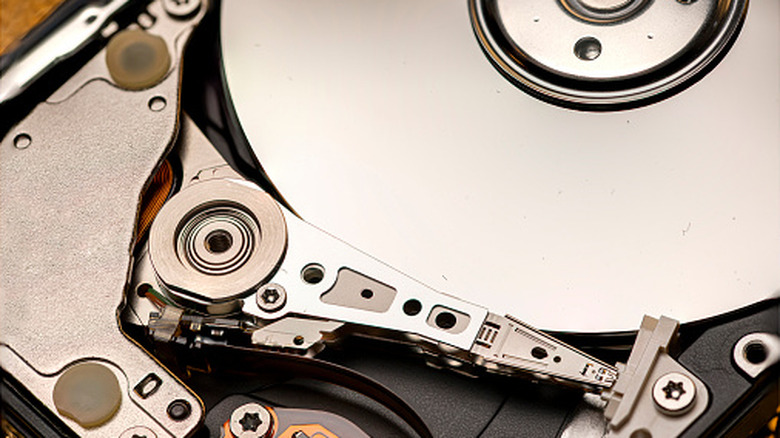
In the last few years, hard drive capacities have seen remarkable growth. We currently have drives that exceed 40TB of storage. The Western Digital UltraSMR ePMR HDD is capable of holding 40TB, and Seagate’s Mozaic 4+ provides 44TB, all from a single unit.
Despite this impressive advancement, many users are curious about how close we are to reaching the petabyte (PB) threshold and if it can truly be realized. To put it into perspective, 1PB is equivalent to 1000TB. As of now, no 1PB drives are available in the market, and none have been revealed either.
At present, companies are aiming to deliver 100TB of storage within a single drive, a target they anticipate hitting by 2029. Beyond this, efforts are being made to enhance drives for improved performance and energy efficiency. Regarding 1PB hard drives, a definitive timeline is still uncertain, primarily due to the operational principles of hard drives and the constraints faced by producers.
Why scaling to 1PB isn’t as simple as it sounds
Ominojarre/Getty Images
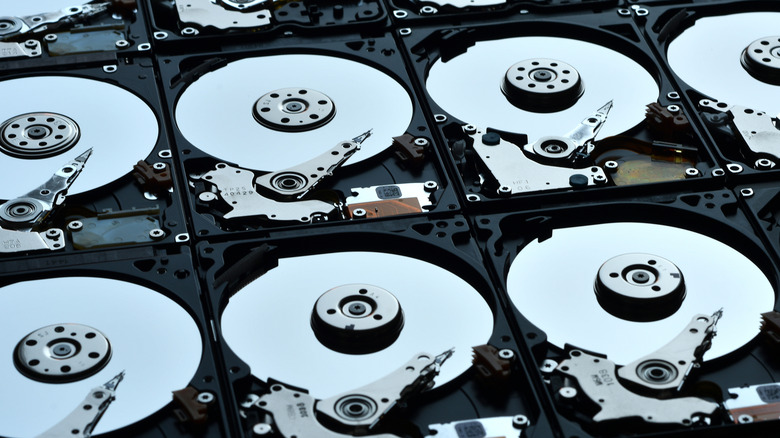
The journey to reach a single petabyte of storage is fraught with complexities. The advancements in technology, while promising, bring forth numerous challenges that manufacturers must navigate.
Achieving 1PB within a disk drive is not simply a matter of increasing storage but requires innovative engineering solutions, particularly in terms of data management and retrieval speeds.
Many elements contribute to the intricacies involved in developing such high-capacity storage solutions, including physical space, stability, and the heat generated by data retrieval processes.