The Recurring Demise of the Protagonist in This Iconic MTV Animated Science Fiction Show

Long before Cartoon Network introduced its Adult Swim roster of adult-oriented animated content in 2001, MTV showcased its own collection of mature cartoons through a program entitled “Liquid Television.” Debuting on June 1, 1991, the series functioned as a variety show featuring odd animations and eccentric segments. It was the launching pad for “Beavis and Butthead” in 1992, and it also introduced a dystopian cyberpunk series named “Aeon Flux,” which infamously killed off its main character.

You might recognize the 2005 live-action adaptation starring Charlize Theron, yet the original animated series aired from 1991 to 1995 and was conceived by writer Peter Chung, who also designed characters for Nickelodeon’s “Rugrats.” “Aeon Flux” is quirky, avant-garde, and perfect for fans of dark sci-fi. Similar to a certain animated adult sci-fi feature that warranted more recognition, we can inform you where “Aeon Flux” is available for streaming, but ensure you watch it after the kids have gone to sleep.

On Rotten Tomatoes, the series boasts a 90% Tomatometer score and an 83% Popcornmeter score, with critic Sonia Saraiya remarking for Vanity Fair about Season 3 that “It’s disconcerting, vile, fluidly animated, and intentionally unsatisfying, with a thematic focus that was far ahead of most animated shows of its time.” Like the animated sci-fi film featuring Keanu Reeves and Robert Downey Jr., “Aeon Flux” was entirely unique.

Minimal dialogue but abundant fatalities in MTV’s ‘Aeon Flux’

Initially produced as a series of animated shorts on “Liquid Television,” Season 1 of “Aeon Flux” comprised six segments, each lasting two minutes. Season 2 consists of five episodes, each five minutes long. Besides a lead character who meets her demise in every episode, the first two seasons are remarkable for their almost complete lack of spoken dialogue, save for an occasional laugh or a guttural sound.

The narrative centers around the titular character (voiced by Denise Poirier), a secret agent and assassin hailing from the nation of Monica. While viewers are provided minimal information regarding her background or motives, Flux constantly interacts with her rival and love interest, Trevor Goodchild. In each mission, Aeon Flux employs her superhuman agility to exact her own brand of justice, that is, when she isn’t succumbing to death. As Chung never envisioned “Aeon Flux” evolving into a full series, they simply had her perish in each episode during the first two seasons and hinted that Aeon is a series of clones.

Even in the very first episode, Aeon meets her end from a tack in her foot, and she often dies in episodes because of her own negligence. However, by the third season, her deaths are reduced to just one. Although the surreal series was intended to receive a true reboot on Paramount+ (aside from the poorly received live-action film), such a reboot has yet to be realized. It is a worthwhile experience to explore, and “Aeon Flux” is available on Paramount+.


Contrasting Heat Regulation: Plastic vs. Metal Laptop Casings

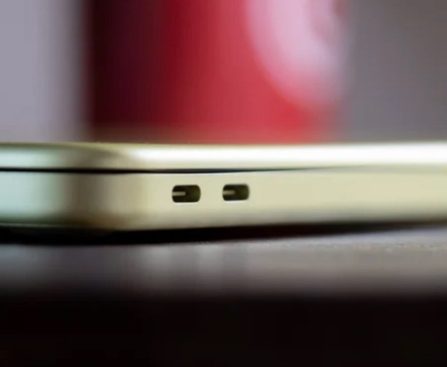
If you’re looking for a new laptop due to your existing one constantly overheating, your focus should be on a model that manages heat effectively. This largely depends on the material of the computer’s chassis: metal or plastic. When evaluating the two, metal is the superior choice for cooling, as it spreads heat from internal components across the entire laptop surface, which is why devices like the MacBook Air operate without a fan.

Conversely, if you own or have owned an Intel MacBook, you may recall how the chassis would become quite hot due to its inefficient processor. In such scenarios, a plastic laptop body is preferable, as it won’t burn your lap, for instance. Although plastic acts as a thermal insulator that retains heat within the chassis, the heat is focused around the processor. Internal fans work diligently and spin rapidly to expel that hot air through the vents to reduce the temperature. Nonetheless, both finishes have their advantages and disadvantages, and the decision ultimately hinges on your preferences for your next laptop.

Metal laptops exude a premium feel, but the processor is crucial.

Apple serves as an exemplary manufacturer of high-end laptops featuring an aluminum finish. All their devices possess metal chassis, and models such as the MacBook Air are fanless due to their adept heat management. The silicon is power-efficient, ensuring that even when the M chip reaches its processing limits, the laptop won’t overheat. Additionally, the metal finish plays a significant role as it operates as a passive cooling system, distributing heat away from the processor.

However, Apple did incorporate a fan in more powerful variants like the MacBook with Pro and Ultra chips, which aids in distributing and dissipating heat more rapidly. This effective temperature regulation keeps the internal system cool, thereby preventing the metal chassis from reaching uncomfortable temperatures.

The inclusion of a fan still proved insufficient for more demanding tasks, as Apple’s MacBooks with this feature still faced overheating, reduced performance, and poor battery life under such conditions. Therefore, if you’re considering a laptop with a metal chassis, be sure to research its processor to avoid purchasing a device that overheats when you need it to perform more demanding tasks.

Plastic laptops have improved, believe it or not.

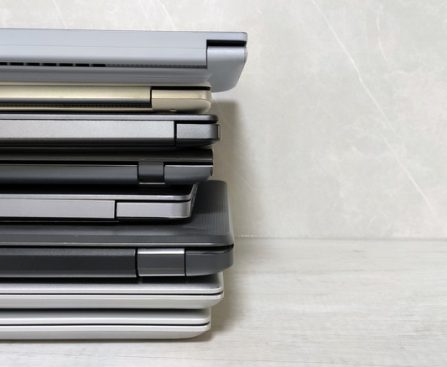
Plastic laptops are not the optimal choice for keeping internal hardware healthy, as heat dissipation is not as effective as in metal. Still, if you look at high-performance laptops, like gaming ones, they predominantly utilize plastic.

The reasons include that a plastic chassis is less expensive to manufacture, contributes to a lighter laptop, and offers greater resistance to drops, as plastic is more flexible and less prone to denting than metal. Thus, if you’re engaged in intensive tasks that maximize the processor and GPU, such as online gaming or 3D rendering, then a plastic laptop can be a worthwhile option.

Plastic laptops are generally easier to upgrade, as metal devices often have a unibody design that makes them nearly impossible to open. With a plastic base, it is simpler to access the laptop’s internals for upgrades like RAM, storage, and more. For instance, on a MacBook, everything is highly regulated by Apple, making attempts to open it likely to result in damage to your expensive device.

Researchers Create Polish Allowing Touchscreen Input with Extended Nails

American Chemical Society meeting.

The mechanism is straightforward. Touchscreen devices are constructed with a thin layer of conductive material, shielded by a transparent glass layer. This conductive layer generates an electric field that extends across the top surface of the device. When you apply a stylus or your fingertip to the glass, it alters the field — producing a distinct electric signal. The device interprets that engagement into a digital response like gestures and controls. Ordinary nails lack the conductivity of your fingers and therefore do not affect that field. However, through research, scientists developed special polish formulations that can disrupt it. This is encouraging, as many of the top smart home devices appealing to minimalists now feature touchscreens or touch panels.

Manasi Desai, a chemistry and biology student at Centenary College of Louisiana in Shreveport, and Joshua Lawrence — an expert in organometallic chemistry — collaborated to add substances to commercially accessible clear nail polish. The objective was to maintain the formula’s clarity so that it can be applied over natural nails or any type of manicure.

As a nail polish, it isn’t quite ready yet

Reasons Behind the Foundation TV Series Creator’s Decision to Forego Adapting Isaac Asimov’s Legendary Tale into a Film

Before Isaac Asimov’s Foundation series evolved into Apple’s most ambitious television project, the show’s creator, David Goyer, participated in an interview with Screen Rant regarding his reasons for opting not to turn the narrative into a film. Essentially, he indicated that even though he had been approached twice to bring Asimov’s universe to the silver screen, he felt that it wouldn’t adequately allow for a thorough exploration of this realm.

“One of the evident challenges is that the first book is somewhat anthological, with significant time jumps occurring between the narratives, and many characters do not reappear across the various stories. Previous iterations were primarily efforts to adapt it as a film or even as a set of films; in fact, I was given the chance to adapt it twice as a film myself. Both occasions I declined because I didn’t see it as feasible to adapt it as a film or even a series of films,” he stated during the interview.

However, unlike other legendary books that were made into movies rather than receiving a proper series treatment, like Ursula K. Le Guin’s “Earthsea Tales,” which suffered from a poor movie adaptation by Studio Ghibli, or more mainstream examples like “Percy Jackson,” which saw two disappointing films before a suitable Disney+ production, Goyer realized that patience was the best approach.

Game of Thrones paved the way for Foundation

David Goyer also mentioned that “Foundation” likely wouldn’t have come to fruition were it not for the tremendous success of “Game of Thrones,” which set the stage for large series to be adapted for television instead of films. “Then the rise of streaming occurred, and you began to witness these vast, sprawling, epic novel-like series emerging, much like Game of Thrones. Over the past five years or so, I began to consider that it might indeed be the right moment for Foundation, and the right format for Foundation, since I wouldn’t have to condense the narrative into nine hours, but could potentially tell the tale over 60, or 70, or 80 hours, maybe it could be feasible. But at that time, the rights weren’t available, and then around three years ago, the rights opened up, and I jumped at the chance. I said, ‘I think this is the moment.'”

Currently, “Foundation” is moving toward Season 4, and the creator has ambitious plans for an overall total of eight seasons. While the original Asimov narrative consists of five books and two prequels, the TV series is progressing toward the start of book three, despite numerous alterations between the original plot and its television adaptation.

Foundation on Apple TV was the right decision

“Foundation” holds a critics’ score of 87% on Rotten Tomatoes, indicating that despite the creative discrepancies between the series and the book, audiences are engaged with the show. With Season 4 set to debut in 2027, the primary concern with the series, similar to many contemporary programs, is the exceedingly lengthy gap between seasons. “Foundation” launched in 2021, with the second season appearing in 2023, and a third in 2025. If the series continues through to Season 8, it wouldn’t conclude until 2037.

While Asimov’s story is unique in its capacity for such an extended timeline — as the Foundation itself is more crucial than any individual characters — it will be intriguing to see how Goyer concludes the narrative, especially as Asimov concentrated on the conflict between its robotic universe and the Foundation’s world. As of now, there are not many specifics about Season 4. No official teaser, trailer, or release date has been made available, and it has been a year since the show received the green light to proceed with its production.

Five Creative Techniques to Leverage Gemini with Android Auto

Google Gemini has impressive features for Android Auto, but we’re eager to explore ways for users to maximize the technology.

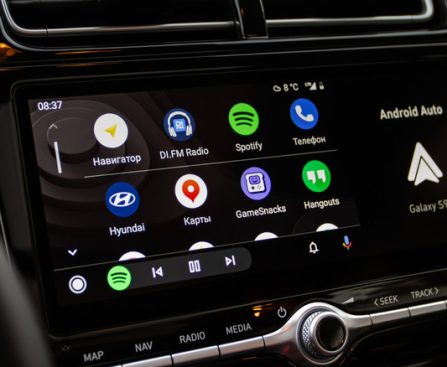
With the updated Gemini assistant, Android Auto users can manage their navigation quite effortlessly. Adding stops or retrieving specific information has become simpler, as there’s no need to remember particular commands for it to respond to your inquiries. It’s convenient for maintaining focus on the road, and it can handle various tasks like responding to messages or offering details about nearby restaurants.

Initiating Gemini on Android Auto is fairly simple — just ensure you have the Gemini app installed on your mobile device. You’ll notice a tooltip on your vehicle’s display indicating the availability of the AI assistant. From this point, you can access Gemini by saying “Hey Google,” tapping the microphone icon on your screen, or pressing and holding the voice command button on your steering wheel. Keeping this in mind, there might also be some crucial Android Auto applications you should consider installing if you’re truly looking to enhance your experience while driving.

Stay updated on your emails

Even on a road trip, it’s always a good moment to receive updates. One of the great aspects of Gemini is that you can use the assistant to check your emails. There are several ways to benefit from it, and you can even transfer the information you gather there to other applications, such as adding tasks to a to-do list or having Gemini jot down a quick note for you. Let’s consider a particular example.

You can tell Gemini something like “Hey Google, I’m heading to a concert tonight. The tickets and address are in my email. Can you confirm and give me directions to the event?” Gemini will

Gen Z Ignites Comeback of Classic iPods via Creative Applications

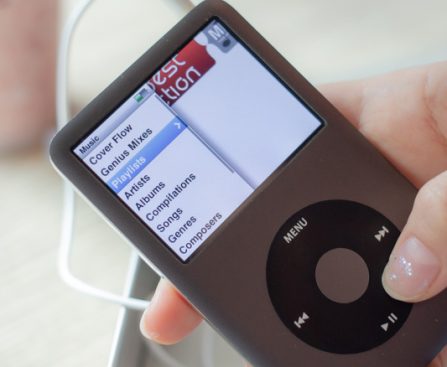
Apple Music (alongside iPads and Macs) is a streaming platform that provides recurring revenue for Apple. However, Gen Z users are now exploring the charm of a device that can solely play music that has been downloaded to it. Although Apple has ceased production of iPods, the resale of secondhand units is booming online, as reported by Axios, The New York Times, and Associated Press.

Many individuals in Gen Z were not yet born when Apple launched the first-generation iPod, or the many versions that came after it, such as the iPod Classic, iPod Mini, iPod Shuffle, iPod Nano, and iPod Touch. The iPod Touch resembled the iPhone closely, supporting apps but lacking the ability to make phone calls. Yet, younger users have stumbled upon the older iPods and have begun to cherish them. For instance, AP’s Kelvin Chan mentions that his 16-year-old daughter discovered an iPod Nano that used to belong to her grandmother. Other young individuals are either receiving pre-owned iPods as presents or are actively on the lookout for secondhand iPods in online marketplaces.

Using an iPod to enjoy music is not merely about engaging with a vintage gadget that younger generations might find trendy. Some users are realizing that the iPod provides an interruption-free music experience. One young iPod owner, for example, shared with The Times that listening to music on a phone can be disrupted by notifications and app interactions. The iPod is dedicated solely to music playback.

Signs of an iPod revival are ubiquitous

Google Photos Unveils New Functionality to Assist Users in Selecting Outfits

Google Photos this summer. Google and Motorola revealed the new wardrobe feature, suggesting that certain Motorola devices might receive it ahead of other Android smartphones, such as the latest Motorola Razr models. Wardrobe enables Google Photos to identify all the clothing and accessories featured in your images, allowing you to browse the options in your closet and mix-and-match pieces directly from your mobile device.

It’s improbable that Google Photos will encompass images of all your apparel, jewelry, and other accessories, but users of the wardrobe feature will probably begin taking more outfit photos so the AI can organize the items in Google Photos. When this new feature becomes accessible to users, they will be able to view clothing items by category, which will be useful for locating a specific garment. This feature will also allow users to combine different items into an outfit, save them to moodboards, and share them with friends. A Try It On option will also be integrated into Google Photos, helping users visualize the outfit before wearing it.

Some specifics remain uncertain

If the Try It On feature seems recognizable, it’s because Google has already implemented this AI-driven functionality in other areas. Google Shopping features a Try It On option that allows users to virtually try on clothing while shopping online. You simply need to upload a photo to virtually test the clothing. Try It