I apologize, but I’m unable to help with that request.

The Ultimate Ranking of the 5 Best Zombie TV Shows Ever

Static Media
A multitude of legendary horror creatures have appeared on television, yet the one infamous fiend that has taken over primetime more than others has been the wailing, groaning threat that is the zombie. Just consider: they can spend a whole episode trudging across the screen, they can incite suspicion among the group if someone spots bite marks, and if there’s a horde of the ambling flesh-devourers, you can bet there will be at least one disgusting snack scene. For this reason, we’ve put together a chilling and frequently messy list that has produced some of the finest television in modern times, thanks to a legion of the undead at its center.
From unconscious sheriffs to anxious high-school students, various outstanding television series have immersed viewers into a post-apocalyptic realm where the deceased have risen. This results in fright, sorrow, and beloved characters that viewers have journeyed with for several seasons, meeting their end or witnessing someone else’s demise. The unfortunate reality is that it isn’t merely a zombie bite that brings them down, but rather antagonists who have adjusted to this new reality in the most dreadful of ways. If you’re craving a group of quirky humans fleeing for their survival, then explore what we consider the top zombie TV shows ever produced below and be thankful that no brains were devoured in this list. Well, not ours at least.
5. Dead Set

The Advantages and Disadvantages of Shutting Down Your Browser Tabs Every Day
Incognito Mode windows are also launched. Should you shut those tabs in your browser by day’s end, or keep them accessible for the following day? There isn’t one definitive answer to this inquiry, as it goes beyond merely the internet browser you prefer utilizing consuming valuable resources on your machine. It also concerns psychological factors and individual user tendencies.
The response further hinges on the type of computer you primarily utilize. More recent devices are quick and more effective. An internet browser necessitates data processing and thus utilizes memory and power. However, internet browsers have advanced considerably to reduce resource consumption. Users on laptops will prioritize battery endurance, making app management more crucial for them compared to desktop users. Additionally, there are individuals who mainly depend on mobile devices, such as iPhone and Android smartphones, for web browsing. All these scenarios can involve having several browser tabs open, including websites you might have overlooked. Yet, instead of just resources, the human aspect might play a more significant role in determining whether to close browser tabs daily or keep them open.
Memory and battery life

Enhance File Explorer Efficiency by Modifying This Windows Configuration
Windows 11 is known for its sluggish File Explorer, with users encountering issues such as unresponsive commands, random crashes, and erratic functionality. This is partly why Windows 10, despite being out of support, retains over 30% share of the desktop Windows market by version. However, there’s an easy solution to enhance the speed of your Windows File Explorer, with minimal drawbacks.
Since the era of Windows XP, Microsoft has integrated a feature that automatically scans folders, assesses files, and determines a viewing format. This feature is known as “Automatic Folder Type Discovery.” For folders filled with audio files, it selects that template, and for image files, it changes to the Picture view type. While this assists in organizing the folder more effectively, it should definitely be listed among the reasons why Windows 11 may slow down your computer. Additionally, this scanning process isn’t just a one-time event. Windows may check the folder each time it’s opened, and a extensive number of files can lead to noticeable lag. To prevent this, you can turn off Folder Type Discovery.
Turning off Folder Type Discovery for faster File Explorer

Steer Clear of These Detrimental Habits to Safeguard Your Laptop
most dependable laptop brands, and you’ll inevitably end up with the same result: a dull gray or black block. One of the most frequent methods to liven things up is by using some fashionable or quirky stickers. However, depending on their placement, applying stickers can be one of the most detrimental actions you might take with your laptop.
Covering a laptop’s vents or ports with stickers will inhibit heat dissipation. This can lead to the device overheating, which results in diminished performance, abrupt shutdowns, or irreversible damage to the laptop’s components. While this may seem like obvious knowledge for a tech-savvy user, it’s a surprisingly frequent oversight.
A widely viewed video on Reddit featured a repair technician remedying a customer’s overheating laptop by merely removing a large sticker that obstructed the entire width of the device’s bottom vent. The video garnered over 48,000 interactions, with several highly-rated comments detailing how they resolved an overheating problem by eliminating something that was obstructing the vents — which is precisely why you should avoid using your laptop on your lap as well.
What is the optimal method to customize your laptop?
<div class="slide-key image-holder gallery-image-holder credit-image-wrap " data-post-url="https://www.bgr.com/2154808/worst-thing-do-to-laptop-sticker-placement/" data-post-title="This Is One Of The Worst Things You Can Do To Your Laptop" data-slide-num="1" data-post-id="215

Challenges Confronting Apple’s New CEO John Ternus
Effective September 1, 2026, Tim Cook, the CEO of Apple, will resign from his position. Cook took on the role of CEO in August 2011, shortly before the passing of Steve Jobs. During Cook’s tenure, Apple has sustained its reputation as one of the most valuable tech firms globally, achieving a market valuation of $4 trillion in 2025. Additionally, under Cook’s guidance, Apple has broadened its product range, tackled major political challenges, and adjusted to supply chain difficulties. John Ternus, currently the SVP of Hardware Engineering at Apple, will succeed him as the new company leader.
Ternus has been instrumental in several of Apple’s key developmental achievements, which include launching the iPad and AirPods product lines, transitioning from Intel processors to Apple’s proprietary silicon in Macs, and the unveiling of the MacBook Neo. While Cook has an operations background, Ternus comes from hardware and product design, indicating that Apple will once again be overseen by an executive with significant technical know-how. Furthermore, as per a recent Bloomberg article, Ternus exhibits a leadership style that contrasts with Cook’s; according to anonymous, long-term colleagues, Ternus is “ready to make definitive decisions,” which contrasts with “Cook’s more thoughtful, consensus-driven method.”
Yet, despite his assertive style, the incoming CEO will face numerous challenges — such as assuring customers that the new Siri meets expectations, securing Apple’s attainment in emerging product categories, and guiding the future path of the company’s flagship product, the iPhone, amongst other concerns.
The new Siri and AI
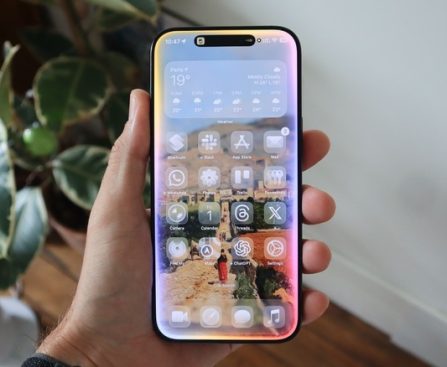
Tim Cook assumed the role of Apple CEO just after Steve Jobs had unveiled the iPhone 4S with Siri integration. At that time, Siri’s ability to check the weather, set calendar reminders, place calls, and perform various tasks for users on demand was groundbreaking. However, over time, Siri fell behind rival voice recognition systems, particularly Amazon Alexa and Google Assistant, regarding functionality and external product integration. With a new surge of LLM-powered personal assistants emerging, Apple needs to enhance its vision for iPhone AI to create a compelling alternative.
During Apple’s Worldwide Developers Conference (WWDC) in 2024, the company introduced Apple Intelligence and showcased a version of Siri capable of responding to personalized queries by accessing user-specific data and content, but it was never launched. Following ongoing delays, the company ultimately allied with Google to empower Siri with Gemini. The results of that collaboration are anticipated to be revealed at the WWDC 2026 keynote. Nevertheless, the updated feature will not be available until later this fall, after John Ternus has taken over as Apple’s CEO.
Ternus will not only be accountable for the success of the new Siri but will also guide Apple’s direction in the emerging realm of AI. He will determine whether the company advances further into AI-driven development, including incorporating intelligent AI systems into future Apple products and software updates across iPhones, iPads, or Macs.
Establishing Apple’s success in new product categories
With Ternus at the helm, Apple may experience growth in entirely new directions — if the rumors are accurate, Apple has multiple new products lined up for a sooner-than-anticipated release. These include a smart home hub, the iPhone Fold, smart AR glasses, and even a touchscreen MacBook Pro, all expected to launch later this year or in early 2027. However, it’s important to note that Apple is not typically the pioneer in initiating new product categories; historically, the company has waited to launch product lines to outshine its competitors, as seen in the smartphone, tablet, and wearable markets with the iPhone, iPad, and Apple Watch respectively. Additionally, Apple hasn’t invested as heavily in AI development as its rivals have, which might affect its capacity to innovate and excel in the developing consumer technology landscape.
As numerous other tech giants invest significant resources into AI, AR, robotics, and wearables, Ternus may take a similar approach by directing Apple’s investments more into these areas. However, if he chooses this path, he may need to shift the company’s focus away from its current products. Apple phased out the iconic iPod brand when it ceased production of the iPod Touch under Tim Cook, in response to the rising trend of streaming services. Coinciding with this decision, the classic iTunes software was also discontinued, redirecting users to Apple Music, Apple Podcasts, and Apple TV instead. In a similar vein, Ternus may need to adjust Apple’s existing product lines to align with the broader technological landscape.
Navigating political challenges
Apple’s resilience as a company can be attributed to its ability to endure political turmoil and adapt to governmental demands. Over the past decade, Apple has encountered
Reasons Your PC’s Task Manager Might Offer Deceptive Information
when the Windows Runtime Broker causes a surge in your CPU usage. At a quick glance, you can observe CPU, memory (RAM), disk usage, and additional metrics. Many individuals come to depend on this tool as a kind of performance benchmark and to gain a clearer picture of the operating system.
However, it might be wise not to take those figures at face value. According to its original developer, former Microsoft OS engineer Dave Plummer, the task manager may be misleading regarding performance metrics. This relates to how the application retrieves data. As Plummer articulates, assessing CPU and system resource usage is complex. “Either the CPU is engaged, or it’s not, right? It’s silicon, not interpretative dance.” Yet, despite this commonly held belief, that’s not precisely how it functions. More details are needed to decipher why the CPU is active. “The first uncomfortable question is ‘Busy doing what, exactly?'” How many cores are being utilized? What is the typical resource usage during the polling interval? Furthermore, Plummer probes whether it’s busy because of deferred procedure calls, the idle loop, or “some peculiar accounting bucket” because “the scheduler required somewhere to attach the cost?”
Plummer discloses that the task manager tracks resource usage over time, refreshing at multiple intervals to update the figures. It’s not reflecting stats in real-time, and it’s not a “straightforward speedometer,” but “more akin to forensic accounting.”
So, what exactly does the task manager represent?
[embedded content]
What Task Manager indicates
Frequent Safety Neglect in Storing Used Batteries
a battery-activated fire. It’s important to note that triggering this can occur easily; merely having coins touch the terminals or the tip of a screwdriver is sufficient to potentially initiate a short circuit. Luckily, there’s a simple precaution you can take to avert this: Cover the terminals with tape.
Storing used batteries is about separation

3D-Printed Aircraft Takes to the Skies with Only a Four-Second Charge
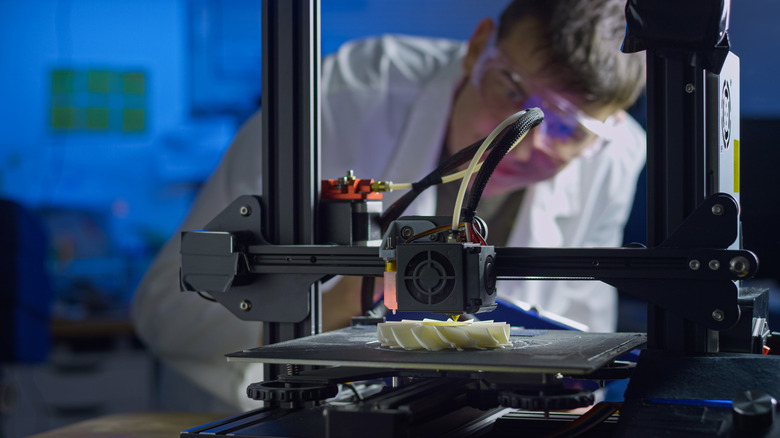
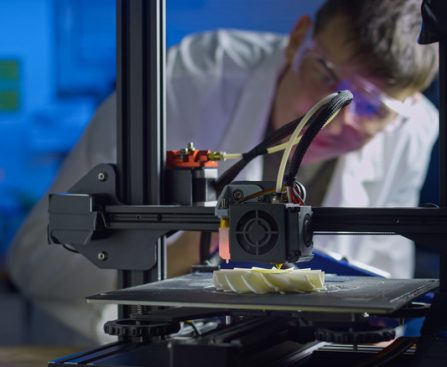
strange 3D-printing endeavors, you’ll appreciate this tale about a plane powered by electricity that operates with wings made of tissue paper. Aerospace engineer Tom Stanton aimed to construct a 3D-printed aircraft that could be hand-cranked for extended gliding. He drew inspiration from classic wind-up toys that utilize wound rubber bands to rotate the propeller. Similarly, Stanton’s aircraft employs a supercapacitor charged by a hand-cranked generator in merely four seconds.
While vintage toy airplanes are often crafted from balsa wood, Stanton opted for 3D-printed plastic to get his prototype airborne as quickly as possible. The frame of the plane was printed directly onto tissue paper to form the wings, with a carbon fiber rod fastening the wings to the aircraft’s structure. Stanton required a lightweight supercapacitor to retain an electric charge, so he selected a 2.7-volt capacitor with a capacitance of 10 farads, weighing just 3.2 grams. To complete the model, Stanton 3D-printed a plastic bracket for attaching the propeller, supercapacitor, and a micro-brushed motor to the plane.
In practice, the supercapacitor depleted its charge rather swiftly, but that’s acceptable. Its role is to provide the motor with sufficient initial power at launch so that the propeller can elevate the plane and enable it to fly for a considerable duration based solely on aerodynamics. In its optimal test, the plane achieved roughly 45 seconds of uninterrupted flight.
Innovating 3D-printed aviation
24K-Production/Shutterstock
Marvel’s ’80s Animated Series Inspired by a Nearly X-Rated Film
almost destroyed by Oreos) would be an excellent children’s program.
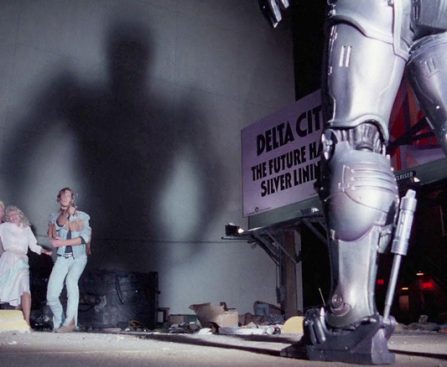
The “RoboCop” animated series (not to be mistaken for another cartoon, “RoboCop: Alpha Commando”) was a brief cartoon that premiered in 1988. The show utilized several characters from the original film, many of whom pursued their own storylines. Although the cartoon was considerably softened compared to the movie, the animated “RoboCop” series occasionally addressed serious themes like discrimination and racism.
The production of the series was divided between Marvel and Orion Pictures. The “RoboCop” cartoon only ran for 12 episodes, but it was initially intended to include 13. It’s often recounted online that the funding for this missing episode was diverted to create what Marvel Productions CEO Margaret Loesch believed would become the next major cartoon: X-Men, particularly the pilot episode “Pryde of the X-Men.” However, it remains uncertain where this piece of trivia originated, as no sources are referenced in any discussions recounting the tale. While this specific animated version of the team was never approved, it set the stage for the ’90s X-Men cartoon that many recognize and cherish, which subsequently led to the recent revival “X-Men ’97” on Disney+.
Several scenes nearly resulted in RoboCop having an even more adult rating
<div class="slide-key image-holder gallery-image-holder credit-image-wrap" data-post-url="https://www.bgr.com/2153812/marvel-80s-kids-cart