
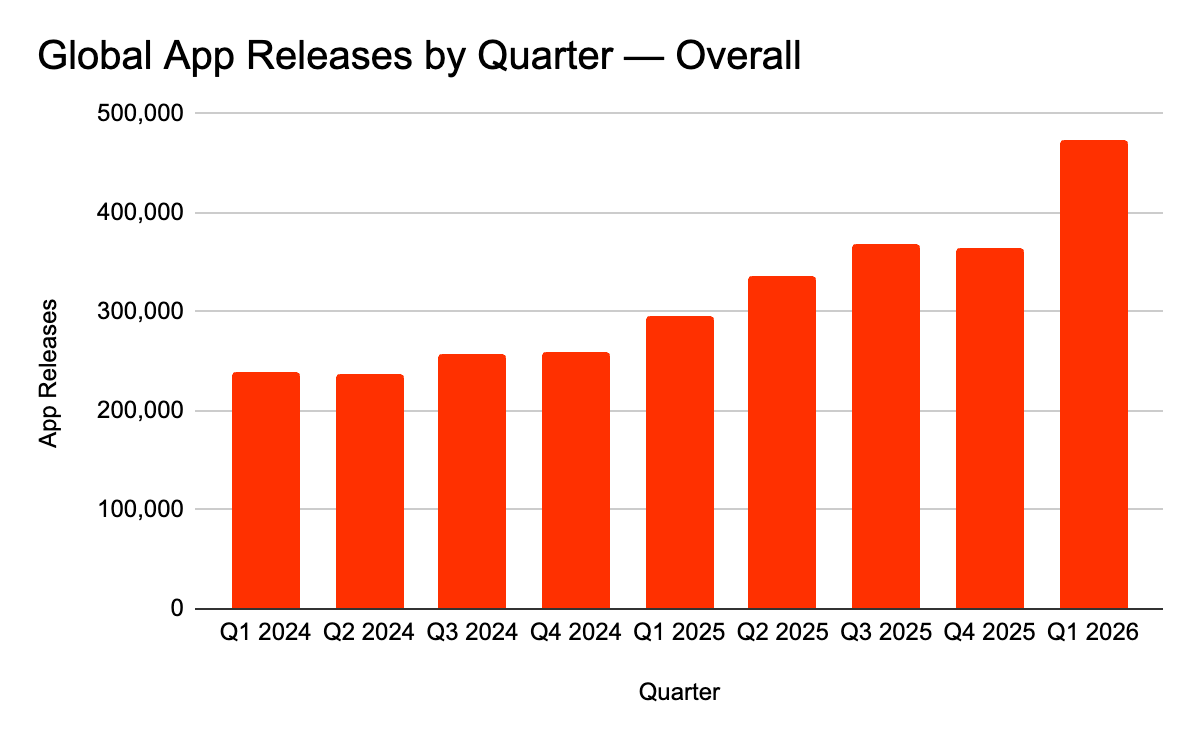

The belief that AI would eliminate apps has proven incorrect, with new app launches rising significantly. Market intelligence provider Appfigures reported a 60% year-over-year increase in worldwide app releases for the first quarter of 2026 on both Apple’s App Store and Google Play. Specifically, iOS App Store releases increased by 80%. By April 2026, app releases surged by 104% across both stores and 89% on iOS compared to the previous year.
Apple’s Senior VP of Worldwide Marketing, Greg “Joz” Joswiak, humorously remarked that the anticipated demise of the App Store in the AI era was greatly exaggerated. The rise of AI chatbots was expected to divert users from apps, a notion supported by industry figures like Nothing CEO Carl Pei, who are building AI-centric smartphones. The New York Times suggested emerging computing platforms like smart glasses or AI-enhanced smartwatches could displace smartphones.
OpenAI is collaborating with Apple designer Jony Ive on an AI hardware device. There’s a possibility AI will facilitate easier app creation, sparking a resurgence in the App Store by empowering creators with ideas but limited technical skills.
Appfigures’ data shows certain app categories experiencing growth in new releases. Notably, mobile games remain the largest portion of new releases globally in Q1 2026. However, “productivity” apps have entered the top five, “utilities” apps have climbed to the second spot, while “lifestyle” apps have moved up to third place. “Health and fitness” apps complete the top five categories.
The current theory is that AI tools like Claude Code or Replit might be behind the spike in launches. It’s possible we’ve reached a point where AI tools become user-friendly enough for people to quickly build desired mobile apps or create their first ones.
The influx of new apps for Apple could explain some of the tech giant’s recent missteps. This week, Apple removed the rewards app Freecash from the App Store for rule violations after it had been in the Top Charts for months. Additionally, they were unprepared for a malicious cryptocurrency app, a Ledger Live clone, that siphoned $9.5 million in crypto from users.
High-profile issues can generate negative App Store publicity, yet Apple significantly contributes to blocking and rejecting unsafe or spammy apps. A 2024 report highlighted that Apple removed or rejected over 17,000 apps for bait-and-switch violations, refused more than 320,000 submissions for spam or misleading content, and prevented over 37,000 potentially fraudulent apps from reaching users.
However, Apple commentators like John Gruber have long advocated for a dedicated team to monitor for popular or high-earning scam apps. If AI-driven apps contribute to the recent surge in releases, the need for such vigilance will only increase as more new apps enter the market, not all benign.