
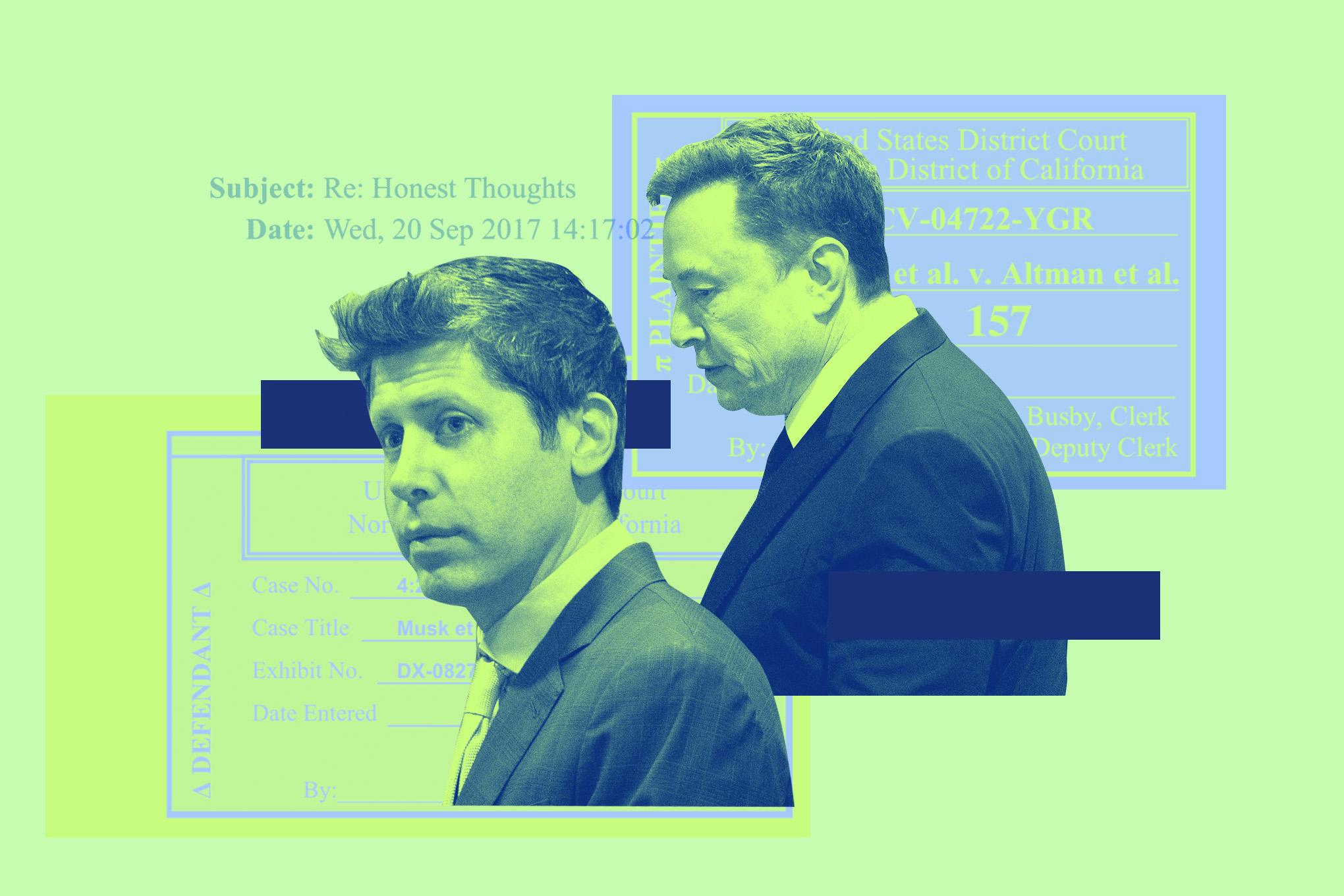

What did we learn from Musk v. Altman? A lot of gossip.
Date: May 14, 2026, 10:21 PM UTC
The closing arguments in the Musk v. Altman trial revealed a chaotic courtroom scene. Steven Molo, Musk’s lawyer, made several missteps, including mistakenly referring to a co-defendant as Greg Altman and incorrectly stating that Musk wasn’t seeking monetary compensation. The judge had to correct him. Despite these errors, Molo emphasized the presence of dishonest testimonies during the trial, though he provided little substantial evidence for Musk’s claims.
OpenAI’s lawyer, Sarah Eddy, responded with a structured presentation of evidence accumulated over the trial. While she didn’t endorse the reliability of any party involved, she took a memorable jab at Musk: “Even the mother of his children can’t back his story.” William Savitt, representing the defendants, highlighted Musk’s frequent lapses in memory regarding crucial details and questioned how a seasoned businessman could misunderstand a four-page term sheet from OpenAI.
The trial, while ostensibly about punishing Altman, provided intriguing insights, primarily serving as a source of gossip. Here are some key revelations:
1. Musk leveraged OpenAI technology for xAI advancements, confirming earlier speculation that xAI’s swift development was not entirely independent.
2. Musk’s attempts to align Tesla AI with AGI failed. His efforts to acquire or undermine OpenAI by recruiting its personnel, including Sam Altman, were unsuccessful.
3. Sam Altman confirmed past reports about his political ambitions concerning a potential gubernatorial run in California.
4. There’s a shared fascination across the board, particularly from Musk, with Demis Hassabis.
5. Despite Musk’s claim of composure, he lost his temper under cross-examination.
6. Mira Murati, implicated in Altman’s ousting, appeared to play a dual role, providing information against and supporting Altman.
7. According to Altman, Musk had visions of OpenAI being inherited by his progeny.
8. Altman’s choice of lawyer, Savitt, proved shrewd as he earnestly challenged Musk in the courtroom.
9. OpenAI engineers, including Brockman, collaborated with Tesla on self-driving software during their tenure with OpenAI.
10. Shivon Zillis concealed Musk’s paternity of her children from significant parties until exposed by court documents.
11. Speculations circulate about secretive communications, bypassing certain channels thought to be compromised.
12. The fear of being overshadowed by mainstream protagonists like IBM and Microsoft looms over some parties.
13. The courtroom discovered Musk’s alleged temper loss, evidenced by an on-record outburst.
Ultimately, the trial’s apparent aim to censure Altman underscores a notable takeaway: Elon Musk’s struggles in the AI sector.
Musk has consistently predicted OpenAI’s failure but simultaneously attempted to undermine it by recruiting its top talent, occasionally succeeding (e.g., Andrej Karpathy). However, xAI faces substantial challenges, including financial losses, staff exodus, and reliance on distilling models from others for functional products. Questions linger regarding the efficacy and sustainability of Musk’s AI endeavors, the implications perhaps noteworthy to potential investors considering SpaceX’s impending IPO.
Both OpenAI and xAI’s grappling for AI supremacy reveal the intricate rivalries and ambitious strategies at play in this high-stakes arena.