The US Navy Introduces Unmanned Drones for Ocean Mine Removal

laying underwater explosives. The U.S. has reacted by shutting down Iranian ports and working to clear routes through the strait; however, as per reports in the Wall Street Journal, the U.S. Navy hasn’t possessed substantial mine-clearing capabilities for decades (allocating its resources and budget towards different initiatives, such as a new class of supercarriers).

In lieu of its conventional, specialized minesweeping vessels and helicopters, the U.S. has started testing unmanned vehicles. A key piece of this next-generation arsenal is a remote-operated underwater mine neutralization device known as the Archerfish, which collaborates with sonar mine-detection systems to find and eliminate mines before they can threaten surface or submerged ships. This permits the Navy to locate and detonate mines using unmanned vehicles, thus avoiding risks to its personnel (or more critical equipment). Here’s how the system functions.
Next-gen mine detection

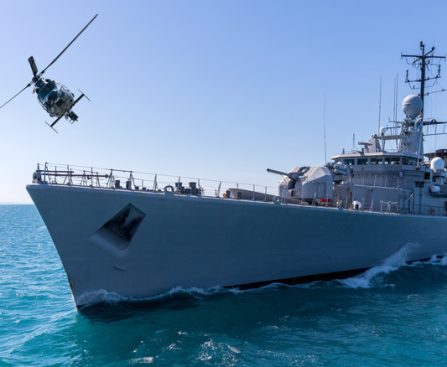
The Archerfish is part of the Navy’s Airborne Mine Neutralization System, which is operated by helicopters (the Sikorsky MH-60S), surface ships, or unmanned underwater vehicles (UUVs). The Archerfish is equipped with high-frequency sonar and low-light video functions for detecting and identifying mines, transmitting information back to an operator via a fiberoptic data link. Upon identifying a mine, it fires a shaped charge warhead to eliminate it.

The Navy possesses additional systems to aid in the detection of mines, including the AN/AQS-20C mine-hunting sonar system. This tool is an underwater towed unit that, similar to the Archerfish, can be launched from helicopters, surface ships, and drone boats (Common Uncrewed Surface Vessel), and it employs four advanced, high-resolution sonars along with electro-optical laser imaging. Connected to its deployment vehicle via a small-diameter electromechanical cable, operators “fly” the unit underwater, surveying the ocean floor landscape and scanning for mines. When a potential threat is detected, the Archerfish can be deployed to conduct the actual neutralization.

Other tools in the minesweeping arsenal

How to Adjust the Ideal Brightness on Your TV

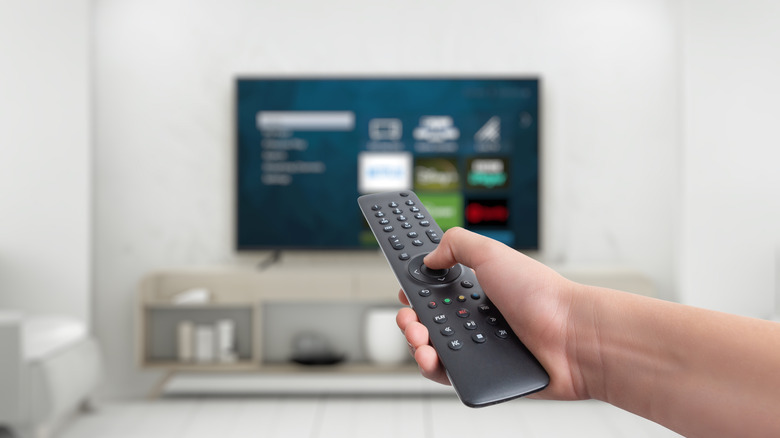
The ability to modify the brightness on your television can be somewhat paradoxical. While this level of control theoretically allows you to tailor an essential aspect of the image quality to your preferences, you might encounter challenges in obtaining the exact results you desire. Fortunately, there’s an easy trick available to help you make the brightness on your TV just right.

Initially, it’s important to mention that the term “brightness” is somewhat misleading. The more accurate term is “black level.” This is because brightness indicates the minimum darkness a specific TV screen can achieve. When you adjust the brightness (or black level), you’re not truly altering the image’s brightness. Instead, you’re modifying the intensity of the black levels. This distinction is vital since the high contrast resulting from rich black levels influences the overall dimensionality of the displayed image.

Achieving the optimal black level on your TV is simple with this method

Banana Pi BPI-OM7 AI 3D Camera Combines BPI-M7 RK3588 SBC and ORBBEC Gemini 2 Depth Camera – CNX Software

Banana Pi BPI-OM7

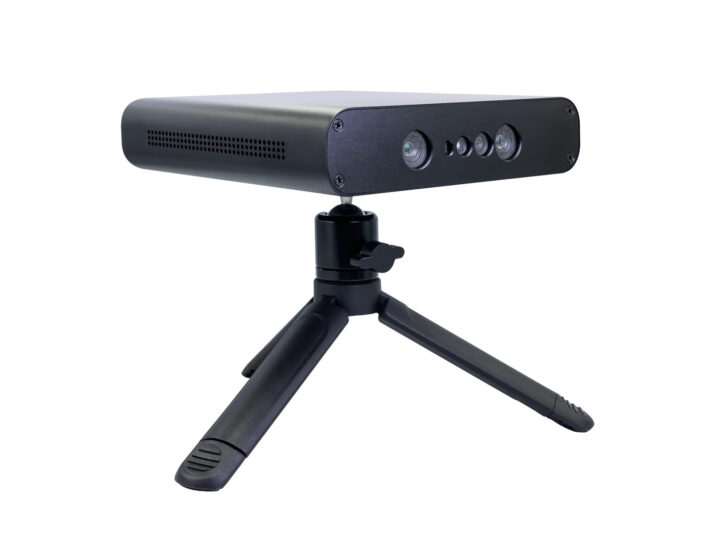
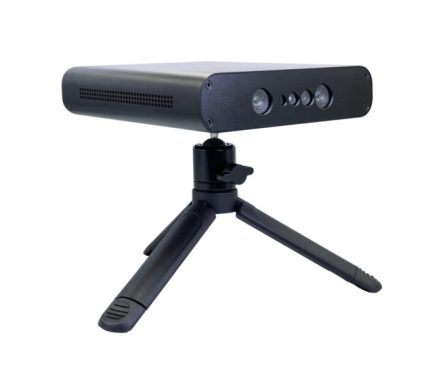
Banana Pi BPI-OM7 is an AI 3D depth camera that combines Banana Pi BPI-M7 low-profile Rockchip RK3588 SBC with an ORBBEC Gemini 2 depth camera, targeting applications in 3D vision, robotics, edge AI, and spatial perception. The solution ships with 8GB of RAM and a 64GB eMMC flash by default, offers HDMI and USB-C video outputs, dual 2.5GbE networking, and a few USB ports. It’s mounted on a tripod for convenience. Banana Pi BPI-OM7 specifications: SoC – Rockchip RK3588 octa-core processor with CPU – 4x Cortex‑A76  cores @ up to 2.4 GHz, 4x Cortex‑A55 core @ 1.8 GHz GPU – Arm Mali-G610 MP4 GPU Video decoder – 8Kp60 H.265, VP9, AVS2, 8Kp30 H.264 AVC/MVC, 4Kp60 AV1, 1080p60 MPEG-2/-1, VC-1, VP8 Video encoder – 8Kp30 H.265/H.264 video encoder AI accelerator – 6 TOPS NPU System Memory – 8GB (default), 16GB, or 32GB LPDDR4x Storage 32GB, 64GB (default), or 128GB eMMC flash […]

The post Banana Pi BPI-OM7 AI 3D camera pairs BPI-M7 RK3588 SBC with ORBBEC Gemini 2 depth camera appeared first on CNX Software – Embedded Systems News.