
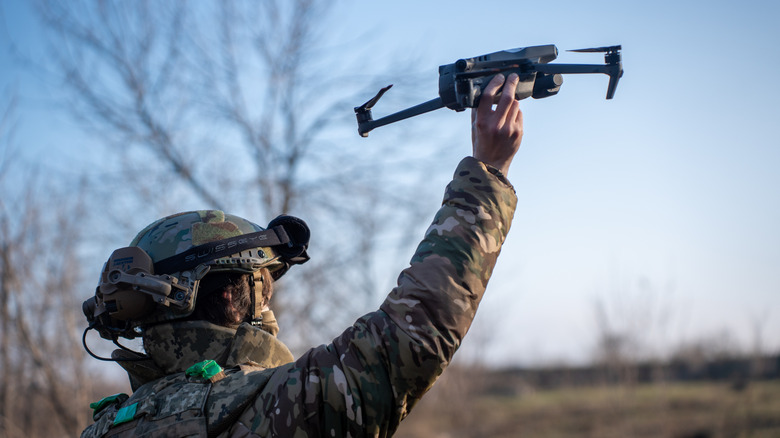

Drone warfare has emerged as a pivotal aspect of the ongoing conflict in Ukraine for both parties involved. Following resource depletion from prolonged fighting, Russian forces are optimizing the utility of their existing drone inventory by repurposing or upgrading drones instead of using them as single-use devices.
For instance, there exists the Molniya drone, typically constructed from super lightweight materials like plywood to conserve battery life during flight. Consequently, the Molniya is undergoing modifications, with engineers eliminating the warhead to increase weight capacity for larger batteries and advanced cameras. Since December 2025, these enhanced versions are referred to as the Molniya-2R and contain some unexpectedly advanced components enhancing their reconnaissance capabilities.
According to the global equipment guide provided by OE Data Integration Network (ODIN), these drones are now equipped with entire mini PCs onboard for control. Specifically, a Chinese Mini PC F8 operating Windows 11 and Raspberry Pi 5 are being integrated into the drone, making it one of the more unusual Raspberry Pi projects. A 10x zoom optical camera with three-axis stabilization takes the place of the warhead. ODIN also notes that these drones are utilizing Starlink, Elon Musk’s satellite internet service, to relay video back to base. There remains a version of the Molniya 2 that retains the warhead, targeting tanks, trenches, and fortified locations.
Russia’s advancement of the Molniya drone is a direct counter to low-cost drones utilized by both sides, significantly shaping the protracted conflict. Ukraine’s air-to-air Sting interceptor, for example, reportedly shot down an entire Russian drone equipped with an air-to-air missile. With numerous strategies thwarting Russia’s ability to execute efficient strikes, Putin’s forces have had to escalate the number of drones deployed per strike. Relative to 2025, Russian assaults on Ukrainian port infrastructures have surged by over 10-fold, according to Oleksiy Kuleba, Ukraine’s Deputy Prime Minister.
Defensive measures have quickly evolved, and Russia has been experimenting with various types of drones in recent weeks. A report from Metro TV on YouTube reveals a new handheld drone interceptor. Shot like a firearm, the $500 Yolka launches an interceptor drone at high speeds, although much of its underlying technology remains undisclosed.
In contrast, Ukraine is working on unmanned ground robots and a points-based system that rewards drones for verified battlefield achievements. Confirmed strikes with drones or the destruction of targets earn points that can be utilized for additional equipment. The Ministry of Defence of Ukraine has reported that in 2025, the points system was linked to over 800,000 Russian targets being struck.