
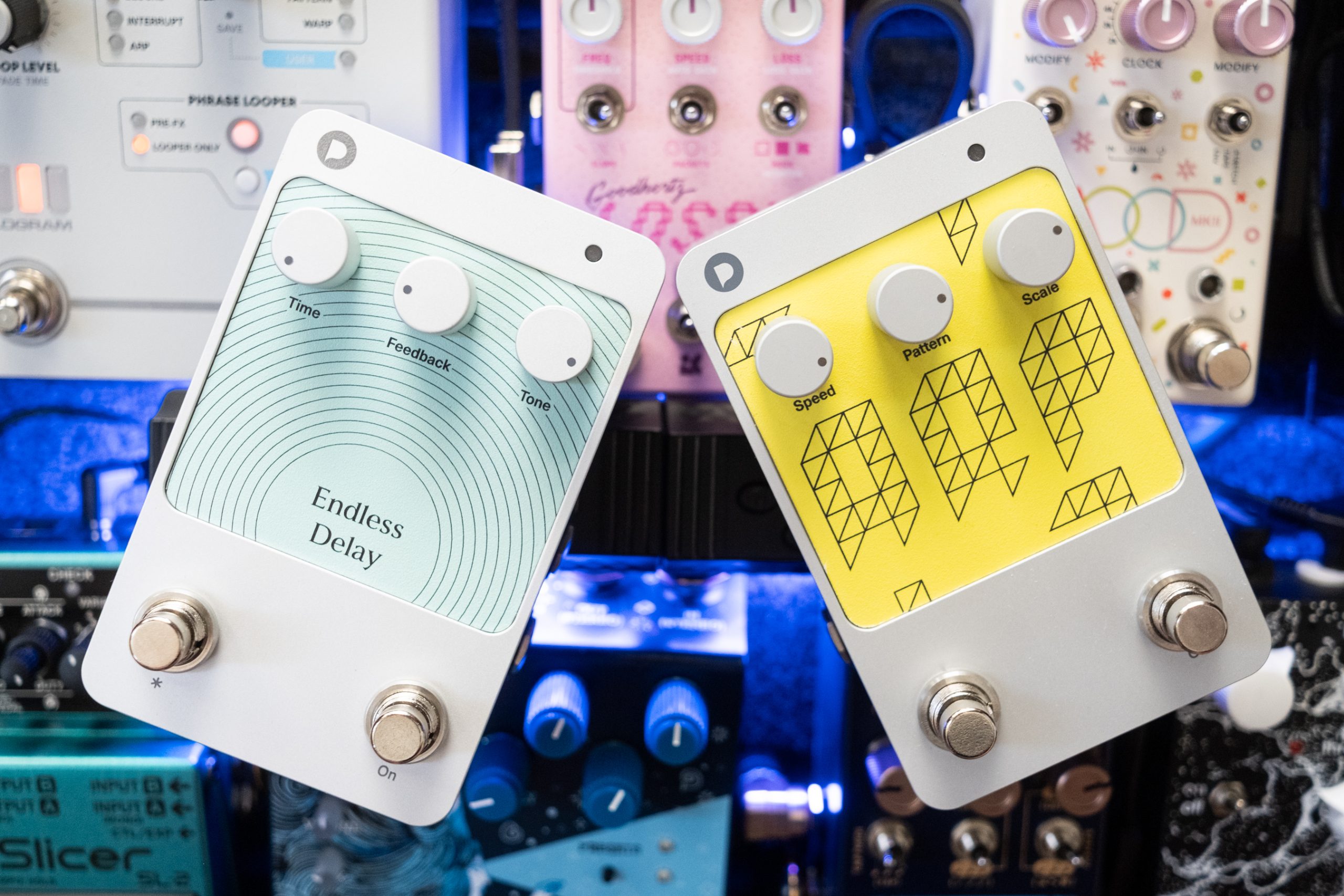

I don’t dislike Polyend’s Endless, but it won’t be making it to my pedalboard.
I’m unsure if there was a demand for an AI guitar pedal, but Polyend, known for its unique musical gadgets, has tried their hand at it. Their previous creations include devices like grooveboxes with old-school trackers and a multi-effect sequencer pedal. With this background, hopes were high for Polyend’s AI effect pedal venture.
The Endless is a $299 guitar pedal running on an ARM processor and gets creative with Playground, an AI-driven platform that turns text prompts into guitar effects. Users can push boundaries without waiting for a mainstream pedal to cater to their unique effect desires, like a ring modulator/auto-wah combo. While its market demand is uncertain, it’s a notable first encounter pairing an effect pedal with AI.
It’s essential to highlight, the AI isn’t embedded in the pedal but is externally managed. Polyend uses its own trained large language model (LLM) for coding the effects, which are later loaded onto the pedal. The options include using existing effects — called Plates — from the community, manually creating them through C++, or prompting the generation of new ones with Playground. For $20, users can acquire a physical faceplate matching a specific effect.
Currently, the Plates gallery offers approximately 60 Polyend-developed effects, including basic saturators, tape simulators, and guitar synths. Exciting finds include Grunt, a lo-fi octave effect; Infinite Hall reverb; and Tessera, a granular pitch-shifting reverb. Stardust, featuring granular delay, reverb, and tremolo, is an exceptional choice not commonly found.
The gallery is open for third-party additions, so users can create an effect in Playground and suggest it for inclusion.
For many, Playground is what makes Endless intriguing. It serves as a web interface for several AI agents, drawing on Polyend’s effects library to transform textual prompts into actual effects with auto-generated code.
Playground’s format parallels a chatbot. You describe the desired effect and controls – there are three knobs as well as the footswitch – and receive multiple results for your idea. You can tweak and refine these suggestions before auto-coding begins, saving both time and cost.
Effect generation costs tokens, with two thousand provided upon purchase and extra costing $20 per 2,000 tokens. Basic effects require fewer tokens, while intricate ones demand more. Such complexity and additional iterations raise the token cost, making clarity imperative in your expectations.
However, crafting effects isn’t straightforward. Tokens can deplete during the iteration process, frustrating users seeking precise outcomes like balanced weirdness. Despite ten thousand complimentary tokens for review purposes, 3,500 were consumed before achieving satisfactory effects, with code generation sometimes taking more than 10 minutes.
An effect called “Resonant Taps” presented challenges. Sought descriptions like “resonant pings” yielded disappointing iterations. Changing briefs garnered fun, albeit different results, costing about $7 in tokens. Simpler targets, like faulty-CD mimic effects, proved more feasible, requiring six generations and meticulous prompts.
Endless allows one effect at a time, loaded via USB. Unfortunately, rebooting following loading issues and potential manual rebooting pose hassles.
If you aim for complex sounds, standard guitar pedals might offer superior experiences over Endless’s AI approach. Polyend Endless shines in exploring non-existent, dream effects, yet pre-made products generally deliver known effects better.
Setting realistic expectations is vital. DIY enthusiasts or professional programmers crafted stronger effects than AI-assisted ones. Endless suits quick idea tests, though inaccessibility to raw code limits pre-existing effect modifications.
For in-depth exploration, modular pedals like Poly Effects Beebo or Empress Effects ZOIA offer advanced community support and top-quality effects, albeit at higher prices than Endless. Given their growing popularity, opting for a reliable manual platform may prove more gratifying.
While Innovative, some may feel unsure about the AI-driven direction. Yet, commendably, Polyend prioritizes ethical AI, forming effects from in-house and open-source material while aiming for energy efficiency. Servers, managed onsite using solar and heat pump energy, reinforce this commitment further. Such efforts aren’t persuasive to staunch AI critics en masse but can offer solace to open-minded users willing to experiment in AI fields.
Overall, Polyend Endless is a budget-friendly gateway to custom effect-making. Should a thriving user base emerge, matching devices like ZOIA, it holds potential as an experimental effects hub without overshadowing mainstream frameworks. Given the music sector’s skepticism toward AI, community growth remains uncertain.