
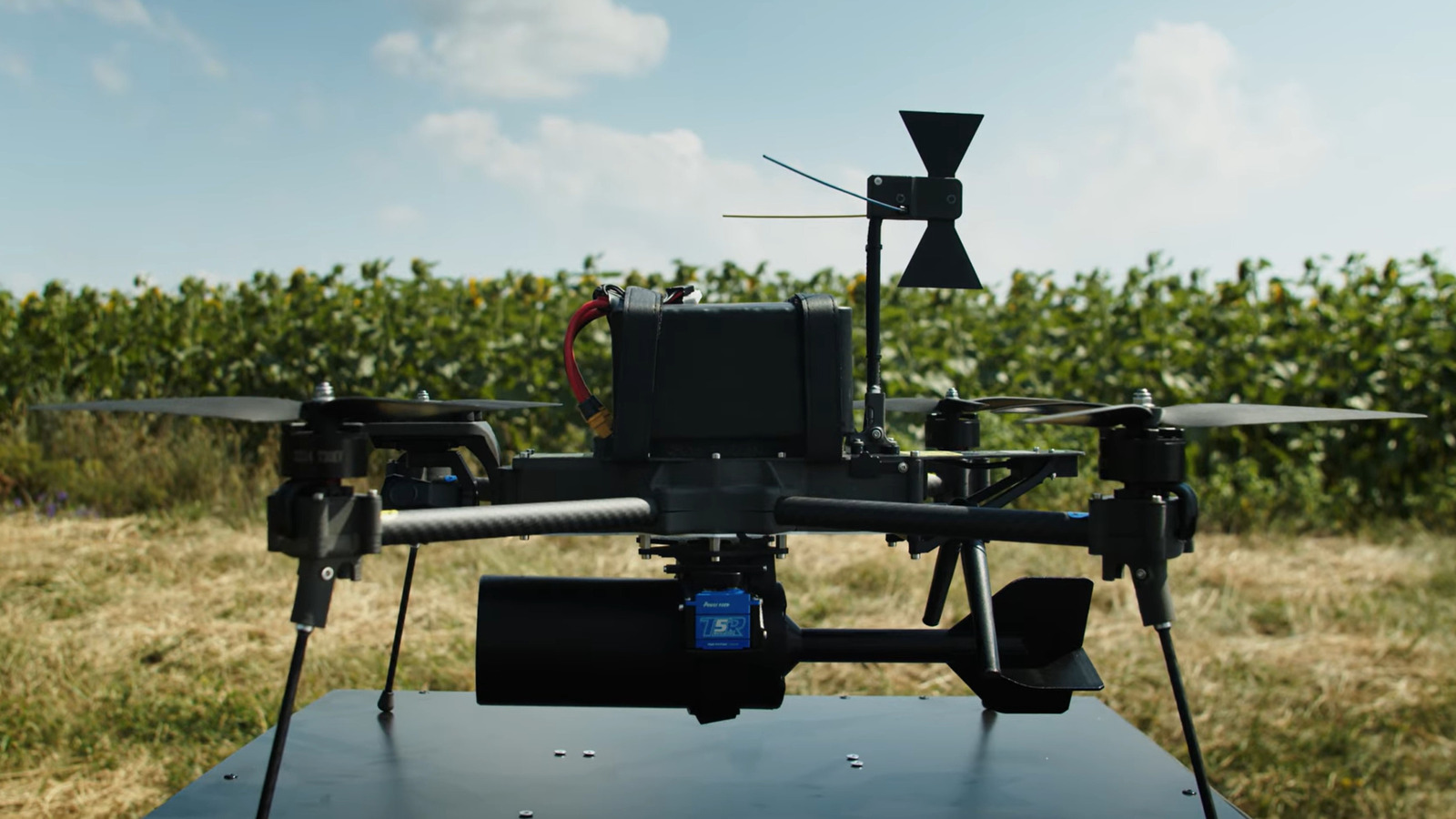

Several European nations are advocating for the enhancement of Ukraine’s military procurement systems. After four years of conflict with Russia, the eastern European country has swiftly emerged as a global frontrunner in drone development and manufacturing. NATO allies have taken notice and are investing in Ukraine’s initiatives to repel Russian forces while also strengthening European security capabilities for future warfare. Ukraine aims to boost its annual drone production to an impressive 7 million by the end of 2026. Meeting such technological demands is challenging — yet one German factory, Quantum Systems, is dedicated to aiding the European-Ukrainian war effort by delivering 10,000 drones each year.
In collaboration with Ukrainian drone maker Frontline Robotics, Quantum Systems is part of a project known as Quantum Frontline Industries. This partnership will manufacture Ukraine’s Linza drone, a logistical military tool capable of transporting small packages to front lines, among other uses. This collaboration is integrated into a larger German government-supported initiative called Build With Ukraine, which was revealed at a ribbon-cutting event attended by Ukrainian President Volodymyr Zelenskyy and German Defense Minister Boris Pistorius in February 2026. Backed by a $2.3 billion grant from the German government, Build With Ukraine seeks to enhance the defense manufacturing capabilities of both countries. The outcomes of Quantum Frontline Industries come after previous commitments of support, including Patriot defense systems, UAVs, and 200 self-propelled Bohdana howitzer systems.
The impact of the Quantum-Frontline alliance is likely to extend beyond Ukraine’s logistical frameworks. Ultimately, it marks a new phase in technology development exports, wherein nation-states and military contractors must adapt — on a large scale — to AI-driven shifts in military technology, as well as advancements in robotics and other novel technologies.
What is the Linza drone?
Situated in Gilching, near Munich, Quantum Frontline Industries’ facility employs approximately sixty individuals and aims to grow to 200 employees by 2027. Most of its staff are Ukrainian, many of whom are refugees. One challenge in producing these German-made drones is securing sufficient local materials; while Ukrainian drones contain both domestic and internationally sourced parts, around 75% of those components are procured from local suppliers (according to Ukrainska Pravda). Nevertheless, the partnership has thus far been successful, with Quantum Systems having sent its initial batch of Linza drones to Ukraine in March. It eventually hopes to broaden its supply chains to Germany and other allied military forces.
Named after the Ukrainian term for lens, Frontline’s Linza UAV is a “multifunctional logistic drone” equipped to carry nearly 4.5 pounds of cargo up to 6.2 miles away, making it an efficient method for delivering lightweight necessities to the front, which include water, mobile phones, batteries, and first-aid kits. According to Frontline (as reported by RadioFreeEurope), the Linza can also act as a “drone bomber” capable of deploying small explosives behind enemy lines. One benefit the Linza offers to Ukraine’s supply chains is its reusability. Utilizing a proprietary, encrypted, and frequency-hopping communication platform along with encrypted one-way video transmission, the drones are able to return to operators after each mission and serve in large logistics operations, while also resisting countermeasures like signal jamming.
Frontline’s Linza drones fulfill a critical requirement for the Ukrainian military. With the proliferation of attack drones during the conflict, resupplying the front has become exceedingly perilous. The Ukrainian military has already initiated the use of unmanned ground robots to supply operators and retrieve deceased or wounded soldiers from combat areas, but mass-produced Linza drones could further augment these actions.
Linzas have paved the way for drone manufacturing across Europe.
Company leaders promote the factory as a symbol of a transformation in Ukrainian defense production. The war has compelled Ukraine to become a pioneer in cutting-edge military technologies by implementing an expedited and decentralized procurement framework to swiftly deliver innovations to the battlefield, ranging from anti-drone laser systems to futuristic exoskeletons reminiscent of science fiction. Meanwhile, allied nations are looking to Kyiv for its hard-earned knowledge. Ongoing conflicts in the Middle East have highlighted this shift, as several Gulf nations have sought Ukrainian expertise and drone exports to safeguard against Iran’s inexpensive Shahed drones.
This demand has placed Ukrainian officials and business leaders in a challenging position. For manufacturers, exporting Ukrainian drones could yield significant economic benefits. However, military planners in Ukraine must balance such economic advantages against the need to optimize domestic supplies, political gains, and technical benefits. By establishing its latest factory, Quantum Frontline Industries underscores the complexities of balancing Ukraine’s political, military, and economic priorities. As Frontline’s business development director Mykyta Rozhkov expressed to Ukrainska Pravda, the agreement “is like a wedding after which the couple moves in with the parents. Because there’s our relationship as two