
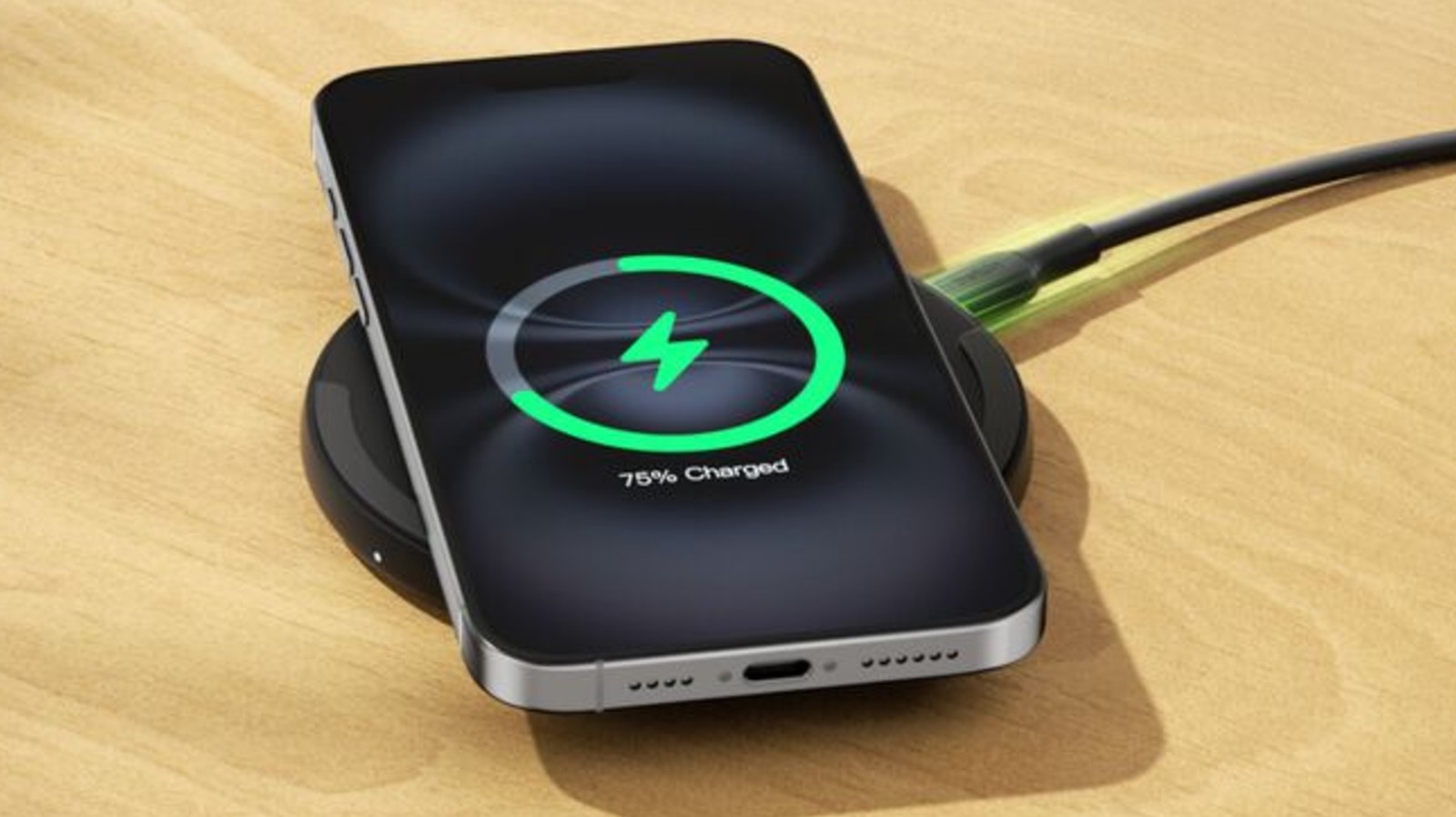

Recharging a mobile phone always requires time. Certainly, you can enhance the speed by enabling fast-charging mode (assuming your device supports this feature), but overusing it may diminish the battery’s overall capacity. So, is there an alternative? Perhaps you could charge your phone wirelessly while it’s also connected to a wall socket with a USB cable. Unfortunately, devices are constructed to avoid this scenario, and even if it were feasible, you’d likely want to avoid it.
The majority of contemporary smartphones are engineered to favor wired charging connections. Even if you initially place your device on a charging pad, your phone will default to wired charging and pull power solely from the cable while it remains connected. How does your smartphone differentiate between the two? It utilizes its built-in power management circuitry. When a mobile device detects a wired link, the system actively turns off the wireless charging coil to avert hardware conflicts and overheating. Because wired connections tend to be quicker and more efficient, the phone is designed to give precedence to the cable.
This is a nearly universal principle among modern mobile phones, including iPhones. But what if it were possible to use both charging methods simultaneously? Theoretically, since both wired and wireless chargers generate heat, attempting to use both to accelerate charging may create excessive heat that could be unsafe. While we’re not suggesting that a fire would occur, excessive heat could potentially harm your battery.
Why charge one device more rapidly when you could power multiple devices at the same time?
At first thought, you might conclude that wireless chargers are unnecessary since they don’t enhance charging speeds while your phone is connected via a cable. In fact, you might think you don’t need a wireless charger if you don’t possess enough compatible electronic devices. However, having (and utilizing) a wireless charger and charging cables presents its benefits.
Clearly, you can power several devices using both a wireless charger and a USB cable, and given that charging pads tend to be substantial, they are less likely to create cable disarray. Devices like the Anker MagGo Wireless Charging Station — one of the finest wireless chargers – can support multiple devices simultaneously. Indeed, this device consumes more electricity than a standard wireless charger, but it only requires a single wall outlet, making it ideal for spaces where outlets are limited (or when you’d prefer not to connect multiple gadgets to a power strip).
When utilizing a USB cable alongside a wireless charger — particularly one that supports multiple device charging — you can choose which gadget charges first. As previously mentioned, wireless chargers aren’t as efficient as wired connections, and some energy is inevitably wasted. Nonetheless, placing a device on a wireless charger is ideal for a “set it and forget it” style of charging. Simply connect any cables to those devices you need quickly (or that aren’t compatible with wireless chargers), and assign the others to wireless chargers. This presents a new level of organization you didn’t realize you needed.