

Frank Brennan/Getty Images
Founded in 1911, IBM is a remarkably old entity that initially dealt with some of the first data tabulating machines, alongside pioneering the punch-card data format. The company consistently advanced computing potential, transitioning to extensive mainframes employed by corporations and organizations such as NASA. Currently, the market for personal computers aimed at consumers is highly varied, featuring brands and producers that present devices across a wide range of prices and functionalities globally.
In the 1980s, however, computers were primarily viewed as instruments for businesses and enthusiasts rather than for everyday domestic use. IBM was the organization that transformed this perception, yet its dominance in this domain was fleeting, as it was eventually edged out of the very market it had energized.
Although IBM became synonymous with the PC revolution and reaped significant profits, its unprecedented accomplishment unwittingly raised the stakes too high for any subsequent endeavors. After the introduction of the IBM PC, all eyes in the industry turned towards IBM’s PC advancements, causing its other ventures, like mainframes and microcomputers, to diminish in visibility. Meanwhile, competitors capitalized on this shift, creating circumstances that eventually facilitated Lenovo’s acquisition of IBM.
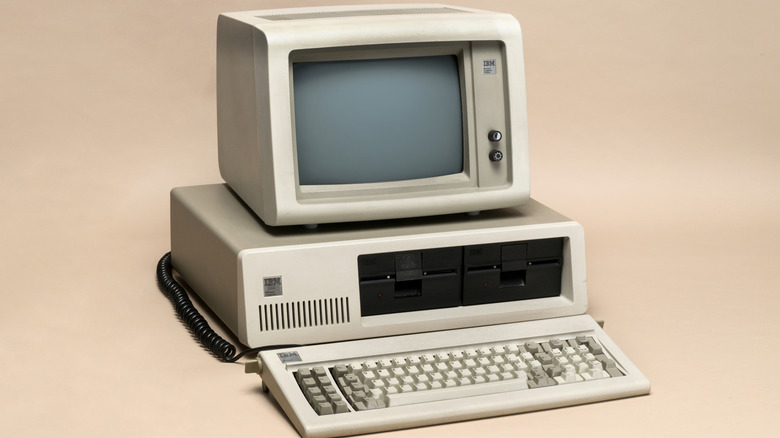
IBM’s inaugural consumer-grade PC revolutionized the market
Frank Brennan/Getty Images
IBM’s initial consumer-oriented PC dramatically altered the landscape.