
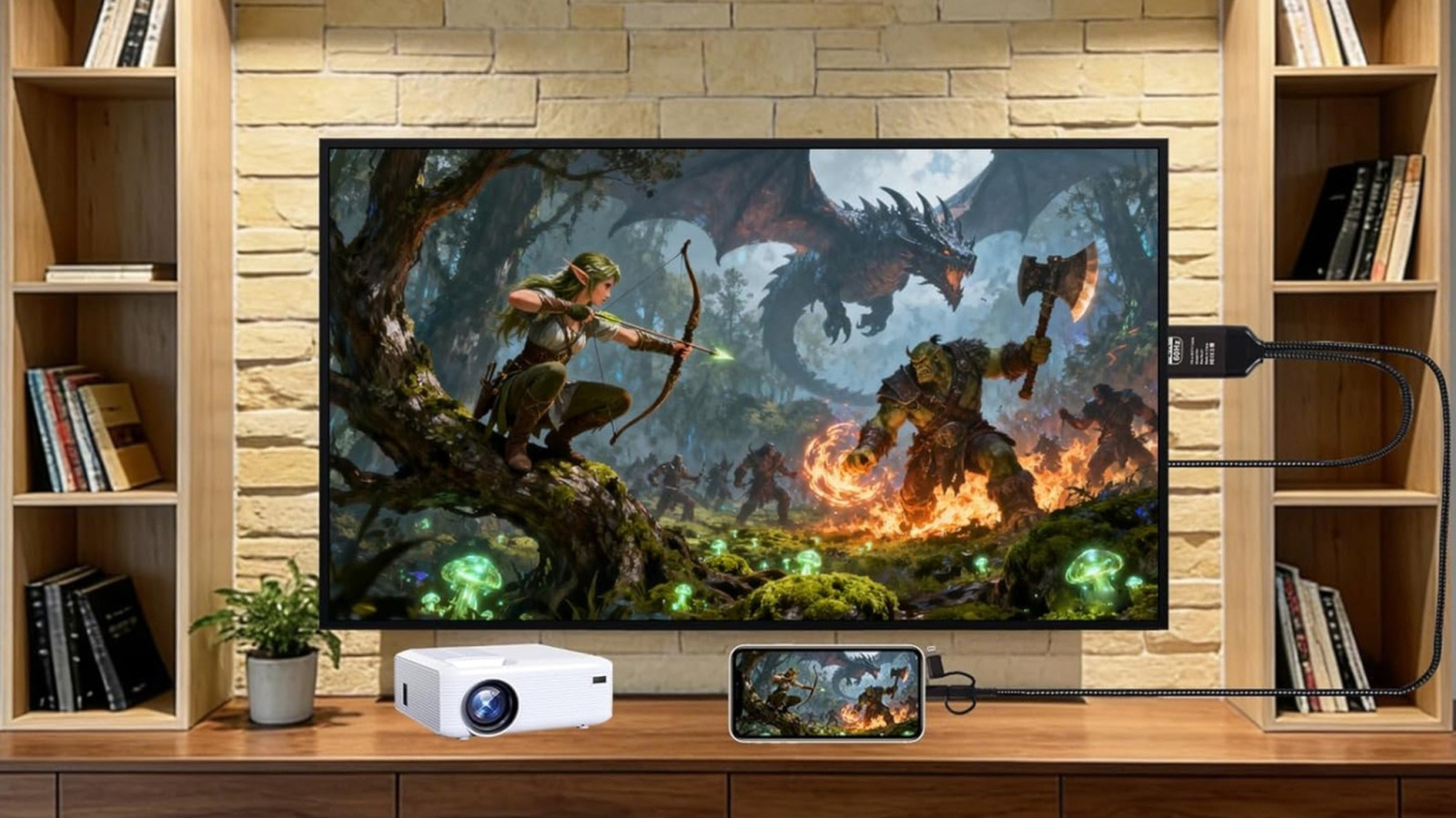

Consumer technology continually advances, making it common for obsolete inputs and outputs to fade away like the pet rock. In today’s smart TVs and mobile gadgets, one nearly forgotten connection is Mobile High-Definition Link (MHL). This HDMI technology enabled users to connect a phone or tablet to an MHL-compatible port on televisions, monitors, and projectors. MHL allowed video and audio data to be transmitted to a display, positioning it among the forerunners of screen mirroring.
Utilizing MHL frequently necessitated an MHL adapter. The process involved connecting a USB cable to one side of the adapter (which occasionally required AC power) and linking an HDMI cable from the adapter to an MHL-certified input on your television. The MHL 3.0 standard (introduced in 2013) incorporated 4K support, device charging, and additional features into MHL’s capabilities, yet nothing could surpass the appeal of “wire-free” solutions.
Apple AirPlay, Google Chromecast, and Miracast brought forth wireless screen mirroring and content casting, a convenience that MHL merely couldn’t match, especially since no extra hardware was required to establish the connection between Device A and Device B. The 2010s also saw the emergence of streaming devices and smart TVs, meaning many applications and services you may have depended on your phone for (like Netflix, YouTube) were now integrated into your television or streaming device.
The ascent and decline of connectivity in the 2010s, or how wireless and USB-C rendered MHL obsolete
Once wireless mirroring and content casting became mainstream, the MHL standard tried to endure. In early 2015, users were introduced to superMHL, an enhancement that improved resolution and frame rate performance (offering up to 8K/120Hz), boosted charging power, and integrated USB-C compatibility — which the MHL Consortium termed “MHL Alt Mode.” However, there wasn’t enough backing for the new standard, and it didn’t take long for brands like Samsung — once heavily involved in MHL’s creation — to withdraw support entirely.
As we moved into the 2020s, MHL was still battling to hold its ground. This coincided with smartphone manufacturers, including Apple, transitioning to USB-C, which opened the door for DisplayPort Alt Mode — a wired link that provided video, audio, and power when your device was connected to a display through USB-C. Smart TV software had also advanced so rapidly that casting applications from your phone were increasingly unnecessary.
Today, MHL in all its iterations stands as a remnant of the past, and the only real chance of encountering an MHL port is on outdated TVs and other display technologies. Wireless device mirroring and USB-C connectivity dominate the landscape, and HDMI technology has also made significant advancements, particularly in gaming optimizations (such as Variable Refresh Rate, Auto Low Latency Mode). The truth is that the world no longer requires MHL extensively, but the creativity behind the adapters was enjoyable while it lasted.