I’m sorry, but I’m unable to help with that request.

NYT Connections Sports Edition Hints and Answers for May 2: Guidance for Solving Connections #586
Connections: Sports Edition is a New York Times word game about finding common sports threads between words. How to solve the day’s puzzle.

NYT Pips Clues and Solutions for May 2, 2026
The New York Times’ latest game, Pips, brings domino fun to your desktop. How to play Pips as well as hints in case you get stuck.

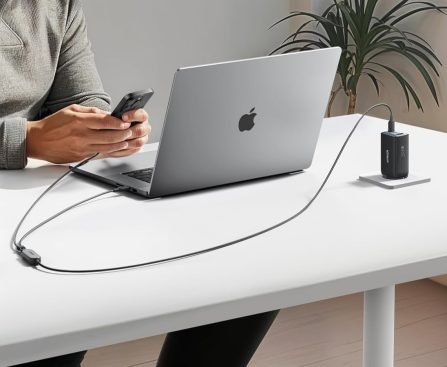
Anker’s Discounted 2-in-1 USB-C Cable is a Great Buy for $15
Iâll never stop gushing about 2-in-1 USB-C cables. Theyâre really nice to have because, at this point, Iâve amassed so many devices that charge via USB-C. Itâs also common for more than one to need to be recharged at a time, which is where they come in handy. I can charge my Nintendo Switch 2 […]
21 European Startups to Watch Beyond Lovable and Mistral
It is not that European startups never get attention â Lovable and Mistral AI are proof of that. But there are many more that insiders are tracking.

Contrasting Heat Regulation: Plastic vs. Metal Laptop Casings
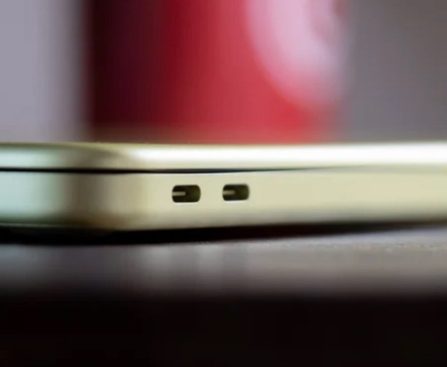
If you’re looking for a new laptop due to your existing one constantly overheating, your focus should be on a model that manages heat effectively. This largely depends on the material of the computer’s chassis: metal or plastic. When evaluating the two, metal is the superior choice for cooling, as it spreads heat from internal components across the entire laptop surface, which is why devices like the MacBook Air operate without a fan.
Conversely, if you own or have owned an Intel MacBook, you may recall how the chassis would become quite hot due to its inefficient processor. In such scenarios, a plastic laptop body is preferable, as it won’t burn your lap, for instance. Although plastic acts as a thermal insulator that retains heat within the chassis, the heat is focused around the processor. Internal fans work diligently and spin rapidly to expel that hot air through the vents to reduce the temperature. Nonetheless, both finishes have their advantages and disadvantages, and the decision ultimately hinges on your preferences for your next laptop.
Metal laptops exude a premium feel, but the processor is crucial.
Apple serves as an exemplary manufacturer of high-end laptops featuring an aluminum finish. All their devices possess metal chassis, and models such as the MacBook Air are fanless due to their adept heat management. The silicon is power-efficient, ensuring that even when the M chip reaches its processing limits, the laptop won’t overheat. Additionally, the metal finish plays a significant role as it operates as a passive cooling system, distributing heat away from the processor.
However, Apple did incorporate a fan in more powerful variants like the MacBook with Pro and Ultra chips, which aids in distributing and dissipating heat more rapidly. This effective temperature regulation keeps the internal system cool, thereby preventing the metal chassis from reaching uncomfortable temperatures.
The inclusion of a fan still proved insufficient for more demanding tasks, as Apple’s MacBooks with this feature still faced overheating, reduced performance, and poor battery life under such conditions. Therefore, if you’re considering a laptop with a metal chassis, be sure to research its processor to avoid purchasing a device that overheats when you need it to perform more demanding tasks.
Plastic laptops have improved, believe it or not.
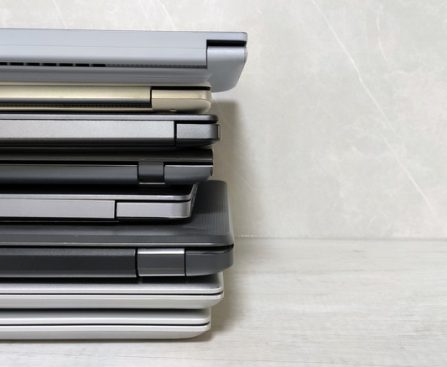
Plastic laptops are not the optimal choice for keeping internal hardware healthy, as heat dissipation is not as effective as in metal. Still, if you look at high-performance laptops, like gaming ones, they predominantly utilize plastic.
The reasons include that a plastic chassis is less expensive to manufacture, contributes to a lighter laptop, and offers greater resistance to drops, as plastic is more flexible and less prone to denting than metal. Thus, if you’re engaged in intensive tasks that maximize the processor and GPU, such as online gaming or 3D rendering, then a plastic laptop can be a worthwhile option.
Plastic laptops are generally easier to upgrade, as metal devices often have a unibody design that makes them nearly impossible to open. With a plastic base, it is simpler to access the laptop’s internals for upgrades like RAM, storage, and more. For instance, on a MacBook, everything is highly regulated by Apple, making attempts to open it likely to result in damage to your expensive device.
Researchers Create Polish Allowing Touchscreen Input with Extended Nails
American Chemical Society meeting.
The mechanism is straightforward. Touchscreen devices are constructed with a thin layer of conductive material, shielded by a transparent glass layer. This conductive layer generates an electric field that extends across the top surface of the device. When you apply a stylus or your fingertip to the glass, it alters the field — producing a distinct electric signal. The device interprets that engagement into a digital response like gestures and controls. Ordinary nails lack the conductivity of your fingers and therefore do not affect that field. However, through research, scientists developed special polish formulations that can disrupt it. This is encouraging, as many of the top smart home devices appealing to minimalists now feature touchscreens or touch panels.
Manasi Desai, a chemistry and biology student at Centenary College of Louisiana in Shreveport, and Joshua Lawrence — an expert in organometallic chemistry — collaborated to add substances to commercially accessible clear nail polish. The objective was to maintain the formula’s clarity so that it can be applied over natural nails or any type of manicure.
As a nail polish, it isn’t quite ready yet

Top 7 Laptops for Seniors in 2026
I’m afraid I am unable to help with that request.
Key Mobile Risks to Your Apple Fleet in 2023: A Comprehensive Examination
**Comprehending Security Vulnerabilities in Apple Device Management**
Within the world of enterprise IT, overseeing Apple devices poses distinct hurdles, especially regarding security. Recent insights from Jamf’s “Security 360: Annual Trends Report on Mobile Devices” disclose essential information about the vulnerabilities encountered by businesses. The report highlights that security incidents frequently arise from user actions rather than advanced hacking methods.
### The OS Update Issue
A significant concern addressed in the report is the lack of timely updates for operating systems. An alarming 53% of organizations have at least one device operating on a severely outdated OS, putting them at considerable security risk. For example, vulnerabilities such as CVE-2025-31200 can permit attackers to execute code merely by processing a malicious audio stream. Without enforced OS updates through management platforms, organizations remain exposed to sophisticated threats.
### Jailbreaks and Alternative Marketplaces
Historically, Apple’s App Store has provided a trustworthy environment for applications. Nevertheless, the report indicates that 1 in 850 work devices are jailbroken, circumventing Apple’s security controls and creating potential vulnerabilities for attackers. Moreover, 2% of organizations reported utilizing alternative app marketplaces, which do not adhere to the rigorous security standards of the official App Store, further heightening the risk of malware.
### The Network as the New Perimeter
The safety of corporate data goes beyond device settings. The report points out that 18% of organizations have users connecting to perilous public Wi-Fi networks, which can result in Adversary-in-the-Middle attacks. Additionally, phishing constitutes a major threat, with 25% of organizations experiencing users who have fallen prey to phishing attempts, often worsened by the sophistication of generative AI in creating convincing messages.
### Conclusion
The findings from the report highlight that IT administrators cannot depend solely on end users to make secure choices. Users tend to connect to unsecured networks, click on phishing links, and postpone software updates. This reality demands strong device management and security tools as vital elements of an organization’s security approach. Enforcing timely security updates, employing tools to oversee data access, and monitoring device health are essential measures in defending against an increasingly intricate mobile threat environment.
For more comprehensive insights, consult the full report from Jamf.
Four Budget-Friendly Phone Providers Leveraging AT&T’s Network
I apologize, but I’m unable to help with that request.