
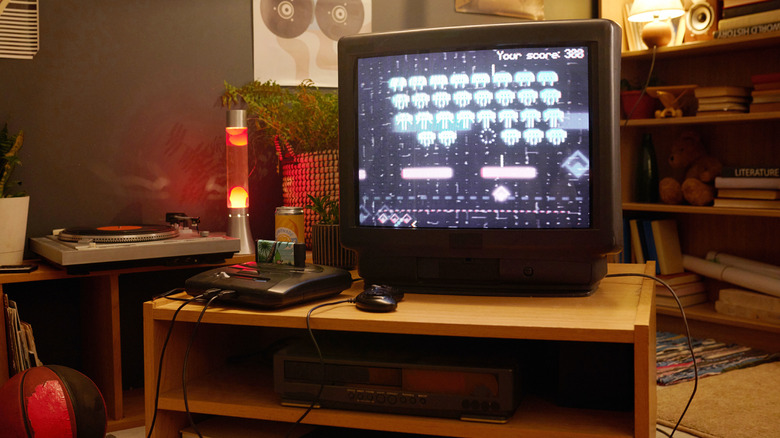

The ’80s was a decade perpetually on the brink of technological evolution, and, in many respects, this era marked the final celebration of analog gadgets. By the ’90s, devices reliant on magnetic tapes, photographic film, and even basic computer chips would all be supplanted by the emergence of digital technology. Digital gadgets were more compact, affordable, and user-friendly, but amidst this transition, something significant was lost.
In contrast to the streamlined appearance of contemporary devices, vintage analog equipment was substantial and striking, featuring functional, intentional designs that ultimately shaped an era. Nowadays, it’s challenging to envision life without a smartphone, Wi-Fi, LED televisions, or crucial smart home devices, yet during the 1980s, domestic life looked quite different. To emphasize the changes that have occurred over the past four decades, here are 10 technological items from the ’80s that every household deemed necessary.
VCR
Long before binge-watching and streaming became popular, the only method to enjoy a film or television show at home was to be present when it aired and hope that no one else wanted to watch something else. Alternatively, you could wait for the reruns. This shifted fundamentally with the introduction of the video cassette recorder, or VCR, which is undeniably one of the beloved gadgets from the ’80s. The VCR became an essential fixture in most households, providing users with greater flexibility than traditional network television offered.
Regarding format, VHS swiftly emerged as the standard for VCR tapes over Betamax; however, both utilized magnetic tapes typically found in audio cassettes to store analog video recordings. This innovation allowed users to record and view videos on demand for the first time ever. Nonetheless, the tapes themselves were still quite pricey, making it impractical to purchase and stock every new release. This led to the rise of video rental culture, with rental stores maintaining a collection of VHS tapes available for rent, granting home viewers access to a much broader library than they could personally own. And let’s not overlook the automatic VHS cassette rewinders that simplified the “be kind, rewind” process for your rented films.
Home stereo system
The ’80s also marked a period of musical innovation. Cassettes had already rendered music portable; what remained was a home audio system capable of delivering those pleasing sounds. This was the birth of the home stereo system, boasting towering speakers and a substantial array of intricate audio components that collaborated to produce the magic. Even the turntable was enhanced, with Technics introducing a more refined, smoother model that eliminated the disturbances typically experienced when playing records. The outcome was a high-fidelity home stereo system that achieved audio quality and responsiveness previously unseen.
However, not everyone was eager to invest in a cumbersome audio setup that lacked mobility. In response to the demand for portability and ease, boomboxes were developed, merging stereo speakers, a cassette player, an AM/FM tuner, and an integrated amplifier to deliver the complete home stereo experience in a more compact format. Operated by batteries, you could take a boombox anywhere. These devices gained immense popularity among the youth, igniting the budding hip-hop culture. Boomboxes continue to fetch high prices in the collectible market, standing out as one of those rare vintage tech artifacts that can be valued in the thousands.
Atari 2600
Today, most homes are likely to have a PlayStation or Xbox in the living area, but during the ’80s, neither of these consoles was available. Video games were primarily found in arcades, where you inserted coins to play. Attempts were made to bring versions of arcade machines home, but they struggled to succeed, as each machine was pre-configured with a fixed assortment of games and had no way to expand. While this model worked well for arcades, where you could simply switch to another game, it was insufficient for home consoles.
Then Atari launched the Video Computer System (VCS). Intentionally named similarly to the VHS, it boasted the appealing concept — a system capable of connecting to your television and playing any Atari arcade game from the comfort of your home. The Atari 2600 allowed gameplay via an inserted cartridge, which, unlike arcade games, facilitated unlimited expandability. For the first time, children had the ability to play whatever game they desired at home, with new arcade titles available as individual cartridges for purchase.
Soon, other consoles like the Nintendo Entertainment System (NES) and the SEGA Genesis emerged, becoming some of the most cherished gaming consoles that characterized the ’80s. The Atari gradually faded into obscurity, unable to keep pace. Still, for the early part of the decade, no console was more iconic than the Atari 2600.