
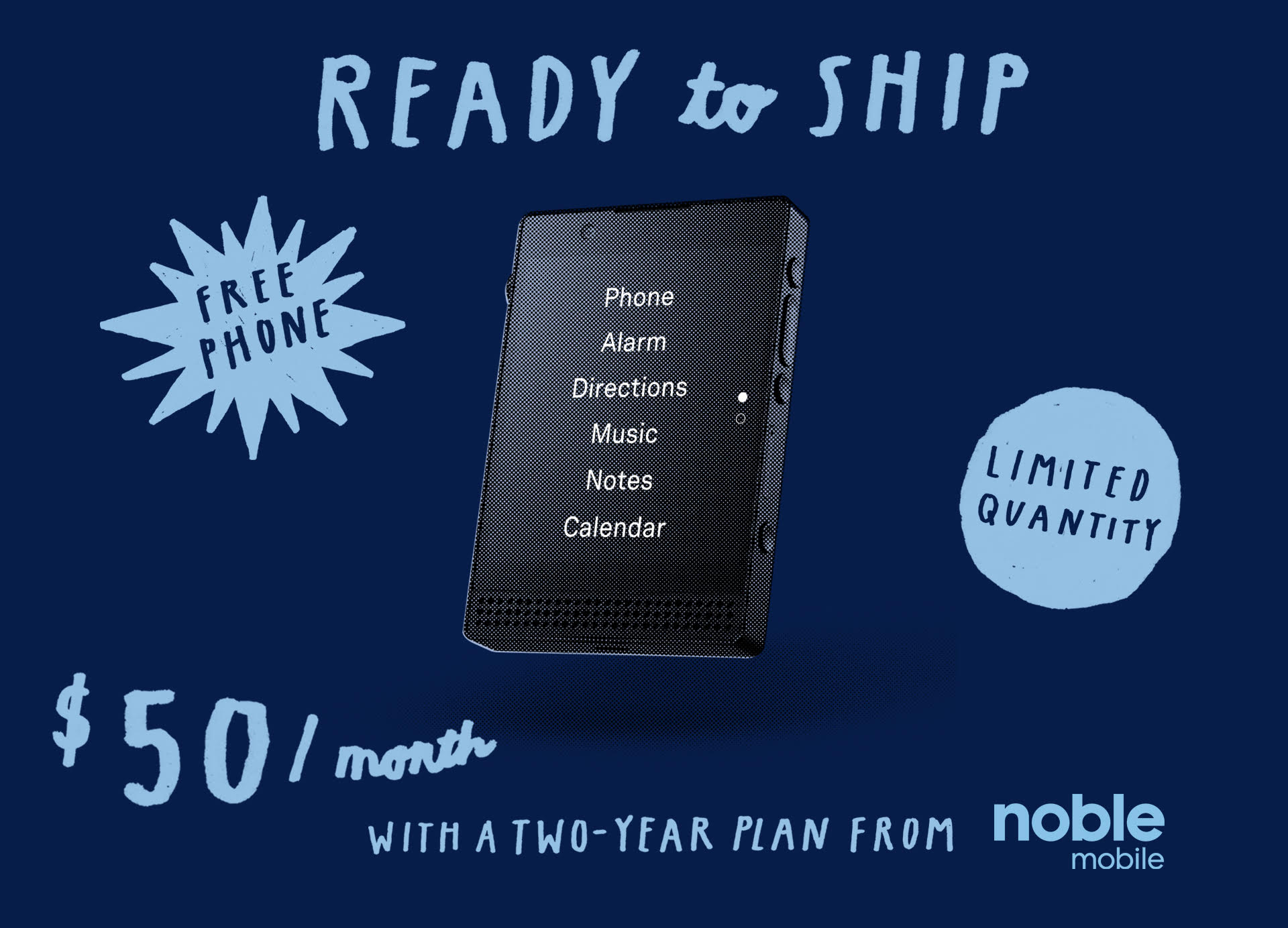

If you’re considering switching to a “dumb phone,” the minimalist Light Phone is partnering with Noble Mobile, a phone network started by entrepreneur Andrew Yang, that offers money back if you use less data.
On Tuesday, 500 Light Phone III units will be available and ready to ship through Noble Mobile. To purchase, you must sign up for a two-year Noble Mobile phone plan at $50 monthly, totaling $1,200 over the contract period.
This marks the first time the Light Phone III is available immediately without paying the full $699 upfront. Without the plan, buying the phone means waiting until September for delivery.
“What’s exciting about the Noble launch is not just a lower barrier to entry, but having the Light Phone III available for immediate purchase,” Light co-founder Joe Hollier told TechCrunch.
Hollier and Kaiwei Tang, the founders of Light Phone, met in 2014 at Google’s 30 Weeks incubator, aimed at artists and designers. The Light Phone has since drawn attention for offering a middle ground between a feature-rich iPhone and a basic flip phone, appealing to those looking to escape smartphone-related stress. However, being a startup, Light Phone has faced challenges in keeping costs low and delivery times short, particularly with challenges like the RAM shortage. Since launching the Light Phone III, they’ve shipped 20,000 devices.
For some, the requirement to sign up for a Noble Mobile plan is actually a plus, with $50 per month for unlimited talk, text, and data being reasonable. Noble Mobile also offers $1 back for each unused GB if you consume less than 20 GB a month, with refunds available as cash or credit card points for later rewards.
“The Light Phone is designed for minimal use, so it aligns well with Noble,” Hollier said.
The Light Phone III provides basic smartphone functions, like calls and texts, while also understanding modern needs with apps for directions and directory assistance. On Reddit, one user shared their experience using the Light Phone to find a tow service—their post highlighted the balance of convenience and simplicity.
Deciding on the right level of minimalism in the Light Phone remains a challenge, such as whether to include rideshare app support or accommodate WhatsApp for international communication. While most users use it as their primary phone, some still carry an old smartphone for tasks requiring more functionality, understandably complicating the idea of minimalism.
Hollier noted some users handle two phones or opt for separate work and personal phone numbers. It’s clear Light Phone users integrate the device into their lives in varied ways.
The latest model now features a color OLED screen instead of e-ink and includes front- and back-facing cameras, in preparation for adding video call support.
Initially hesitant about including a camera, the founders—both film photographers—view smartphone photography as sometimes detracting from the art’s intentionality. Their camera design focuses on simplicity: a physical shutter button and straightforward operation, similar to a vintage point-and-shoot camera.
Despite its merits, the Light Phone has downsides—lack of RCS texting support and reliance on basic SMS means clunky group chats, no end-to-end encryption, and compressed multimedia, appealing to users unconcerned by these limitations.
“It’s not about giving up technology or using the latest AI-driven smartphones,” Tang said. “It’s finding middle ground with technology that doesn’t prioritize attention and advertising.”